A Primer on Nutanix Cloud Clusters (NC2)

A Primer on Nutanix Cloud Clusters (NC2)

If you strip cloud strategy down to its essentials, you quickly notice that IT leaders are protecting three things. I am talking about continuity, autonomy and freedom of movement. Yet most clouds, private or public, quietly decimate at least one of these freedoms. You can gain elasticity but lose portability. You get managed services but have to accept immobility. And you can gain efficiency, but introduce concentration risk. Once the first workloads are deployed on a hyperscaler, many organizations underestimate the difficulty of reversing that decision later. And in some cases, they are aware of it and call it a strategic decision.

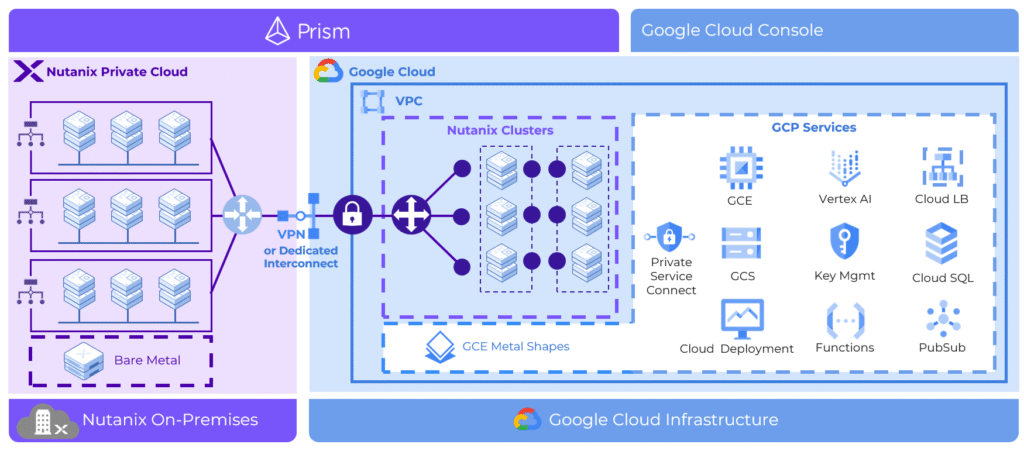
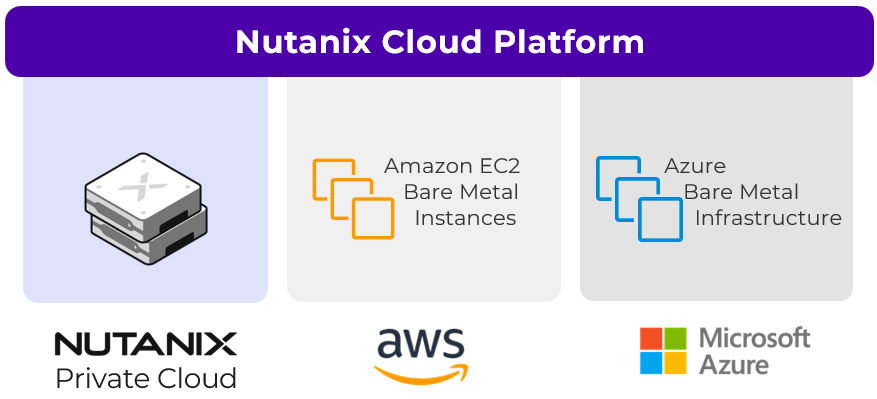
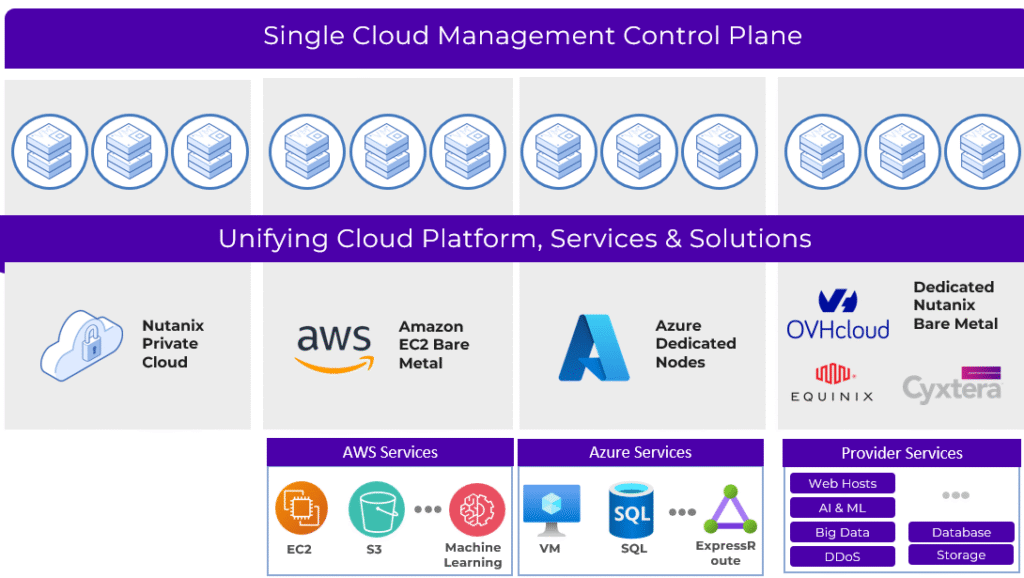
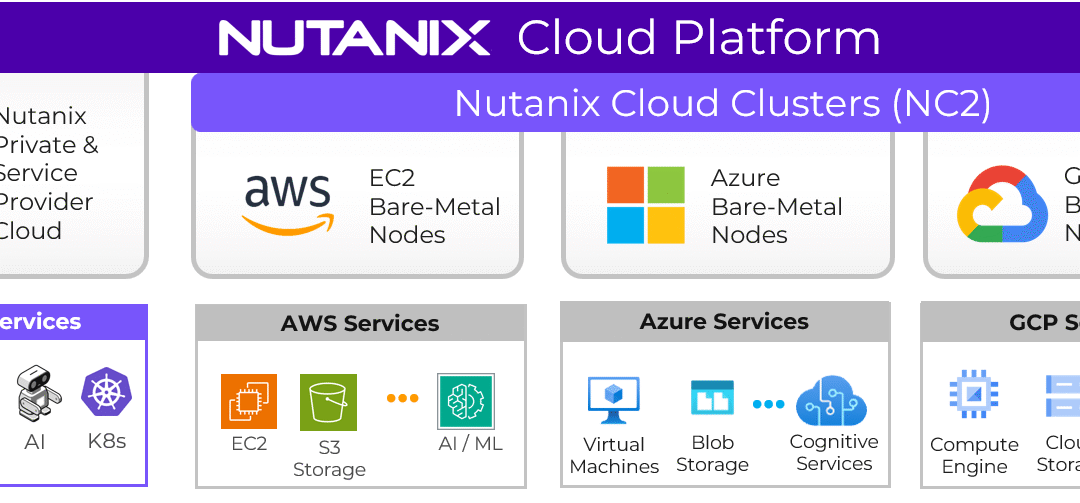
Nutanix Cloud Clusters (NC2) repositions control. It extends your existing Nutanix Cloud Platform (NCP) directly into the hyperscaler of your choice (AWS, Azure; or Google Cloud in tech preview) without requiring you to rewrite applications or adopt a new operational model. NC2 runs the same Nutanix stack on hyperscaler baremetal. Think of it as extending your private cloud to someone else’s cloud.

Workload Mobility

Most cloud migrations fail not because the target cloud is inadequate, but because the friction of moving virtual machines (VMs) is underestimated. Every dependency, every network pattern, every stored image becomes an anchor that slows down the migration. NC2 removes most of these anchors. Because the target environment is still Nutanix, your VM format, storage layout, operational tooling, and lifecycle management remain identical.

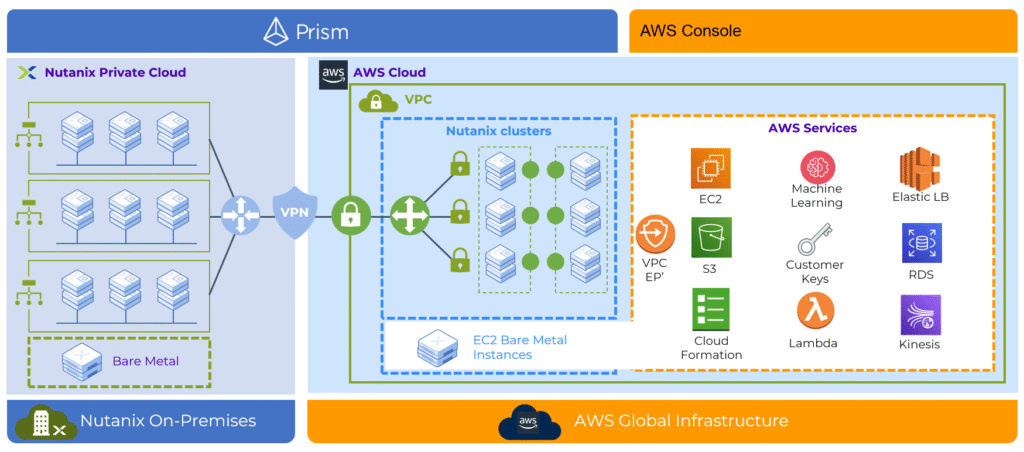
NC2 on AWS

This creates a kind of reversible migration (aka repatriation). You are no longer forced to commit to one direction. You can burst, repatriate or rebalance depending on business needs, not platform constraints. The psychological barrier of “this migration better be worth it because we cannot undo it” disappears.

Cloud Exit

Cloud exit is a topic we have been discussing in our industry for some time now. IT decision-makers want to know if and how they could exit a cloud if necessary. Cost shocks, sovereignty concerns, regulatory pressure, or simple risk diversification can all trigger a reassessment.

What happens if our cloud dependency becomes a risk? What if we need to move? Do we have an exit plan?

NC2 is one of the few architectures where an exit is not a complicated multi-year re-architecture effort. Workloads running on NC2 can be moved back to an on-premises Nutanix cluster without replatforming and without importing cloud-native dependencies that are difficult to untangle. Platform symmetry makes the exit not only thinkable, but executable.

When your workloads run on NC2 in AWS or Azure, they do not inherit the hyperscaler’s native VM formats, storage layouts, or proprietary IAM constructs. They run inside the same Nutanix Cloud Platform you already operate on-prem. This means that the workloads you run in the cloud are the same as those you can run in your data center.

In many organizations, repatriation is seen as a point of failure. Something you only do when the cloud strategy “didn’t work out”. That framing is outdated. Repatriation is increasingly a proactive governance mechanism:

  • Sovereignty changes? Move workloads home.
  • Cost pressure rises? Bring certain workloads back on-prem during peak cost cycles.
  • Predictable costs? Run static workloads privately but scale elastically via NC2.
  • Vendor terms change? Shift to a different infrastructure model.
  • GPU scarcity? Temporarily run training or inference workloads where you have capacity.

Nutanix Hybrid Multi-Cloud Operations

The cloud world has become multipolar. Many organizations are no longer choosing between “on-prem vs cloud”, but between multiple clouds like hyperscalers, European sovereign clouds, vertical-specific clouds, and dedicated regions.

Repatriation used to mean going home. With NC2, it can also mean going sideways:

  • From Azure to a sovereign cloud provider
  • From a hyperscaler to a private cloud built on NCP
  • From one hyperscaler to another when commercial, regulatory, or technical factors shift
  • From cloud to edge
  • From cloud to hosted private infrastructure via a service provider (OVH for example)

In other words, it allows organizations to move workloads to the location that makes sense right now, not the one that made sense during a six-year-old strategy cycle.

Note: NC2 is fundamentally a sovereignty mechanism because it makes long-term commitments reversible.

Operational Relief for Small IT Teams

Every new stack, platform, or cloud demands new knowledge, new operational patterns, new tooling, and new troubleshooting domains. When a team of five suddenly needs to understand the details of AWS, Azure, Nutanix, Kubernetes, storage arrays, hypervisors, and cloud-native services, hybrid cloud becomes an unmanageable landscape.

Even though NC2 is not a managed service, it behaves like a consolidation layer that collapses the operational surface. The team does not need to master the specifics of hyperscaler virtualization models, instance families, cloud-native block storage semantics or proprietary IAM patterns, but they operate the same Nutanix environment everywhere. The public cloud stops being an alien planet with its own physics and becomes an extension of the data center they already know.

For small teams, the value is immense. They no longer split their attention between incompatible worlds. They do not require deep AWS or Azure certifications to run VMs in the cloud, nor do they need a dedicated cloud operations squad. No need to maintain multiple monitoring stacks, patching processes or network topologies. They simply work through Prism, with the same lifecycle management, upgrade workflows, automation, and storage patterns. Regardless of where the hardware resides.

In short, efficiency increases as complexity decreases.

Conclusion

Ultimately, NC2 is not just a technical extension of Nutanix into public cloud regions. Think of it as a structural correction to a decade of cloud decisions shaped by lock-in, fragmentation, and asymmetrical dependencies. It gives organizations the right to change their mind without paying a penalty for it. It reduces operational noise instead of amplifying it. It allows teams to stay focused on outcomes rather than infrastructure politics.


When “Staying” Becomes a Journey And Why Nutanix Lets You Take Back Control

When “Staying” Becomes a Journey And Why Nutanix Lets You Take Back Control

There are moments in IT where the real disruption is not the change you choose, but the change that quietly happens around you. Many VMware customers find themselves in exactly such a moment. On the surface, everything feels familiar. The same hypervisor, the same vendors, the same vocabulary. But underneath that surface, something more fundamental is shifting and Broadcom’s new licensing and product model has turned VMware’s future into a one-way street. A gradual but unmistakable movement toward VMware Cloud Foundation (VCF).

What makes this moment so tricky is the illusion it creates. Because the names look the same, many organizations convince themselves that staying with VMware means avoiding change. They assume the path ahead is simply the continuation of the path behind. Yet the platform they are moving toward does not behave like the platform they came from. VCF 9 is a different way of running private cloud. A different architecture, operational model, and a different set of dependencies and constraints.

Once you see this clearly, the situation becomes easier to understand. Even if you stay with VMware, you are moving. The absence of physical distance does not mean the absence of migration. What changes is not the location of your workloads, but the world those workloads inhabit.

And that world looks much more like a cloud transition than like a traditional upgrade.

This is the first truth enterprises need to accept: it is still a migration.

The Subtle Shift From Upgrade to Replatforming

VCF 9 carries its own gravity. It reshapes how the environment must be designed, how networking is stitched together, how lifecycle management works, how domains are laid out, how automation behaves and how operations are structured. It forces full-stack adoption, even if your organization only needs part of the stack. And once the platform becomes prescriptive, you must either adopt its assumptions or fight against them.

If this exact level of change were introduced by a hyperscaler, nobody would hesitate to call it a cloud migration. It would come with discovery workshops, architecture reviews, dependency mapping, proof-of-concepts, testing phases, retraining, risk assessments,and new governance. But because the new platform still carries the VMware name, some organizations treat it as a large patch. Which it clearly is not.

This is where many stumble. An upgrade assumes continuity. A migration assumes transformation. VCF 9 sits firmly on the transformation side of that spectrum. Treating it as anything less increases risk, cost and frustration.

In other words, the work is the same work you would do for a cloud move. Only the destination changes.

Complexity You Did Not Ask For

One of the most overlooked consequences of this shift is the gradual increase in complexity. The move to a full-stack VCF world comes with the same architectural side effects you would expect when adopting any complex platform. More components, more integration points, more rules, more interdependencies, more expertise required to keep things stable.

Organizations want simplicity. You pay for it in architecture that becomes harder to evolve, in operations that require more coordination, in outages that take longer to troubleshoot, in people who must maintain increasingly fragile mental maps, and in costs that rise simply because the platform demands it.

And this is where the forced nature of the move becomes visible. You are inheriting complexity because the vendor has decided the portfolio must move in that direction. This is the difference between transformation that serves your strategy and transformation that serves someone else’s.

One Migration You Cannot Avoid, One Migration You Can Choose

At some point, every organization reaches a moment where movement is no longer a matter of preference but of circumstance. The transition to VCF 9 is exactly that kind of moment. Once this becomes clear, the nature of the decision changes. You stop focusing on how to avoid disruption and start asking a more strategic question: If we are investing the time, energy, and attention anyway, where should this effort lead?

VCF 9 is one possible destination. And it may very well be the right choice for some enterprises. But the key is that it should be a choice and not an automatic continuation of the past.

Customers need a model where the effort you invest in migration pays you back in reduced complexity rather than increased dependency.

Nutanix can be an option and a different operating model.

Yes the interesting truth is that both paths require work. Both involve change. Both need planning, testing, and careful execution. The difference lies in what you get once the work is done. One migration leaves you with a platform that is heavier and more prescriptive than the one you had before. The other leaves you with an environment that is lighter, simpler, and easier to operate.

The Real Choice in a Moment of Unwanted Movement

When change arrives from the outside, it rarely feels fair. It interrupts plans, forces attention onto things you didn’t choose, and demands energy you would rather spend somewhere else. Nobody asked for it. Nobody scheduled it. Yet here it is, reshaping the future architecture of your private cloud, whether you feel ready or not.

A different model of infrastructure can offer a way to use this forced moment of movement to your advantage, to turn a vendor-driven transition into an opportunity to simplify, to regain autonomy, and to design an infrastructure model that supports your next ten years rather than constraining them.

You may not have chosen the timing of this transition. But you can choose the shape of the destination. And in many ways, that is the most meaningful form of control an organization can exercise in a moment where the outside world tries to dictate the path ahead.

Moving away from VMware to Nutanix makes sense when…

Moving away from VMware to Nutanix makes sense when…

You shouldn’t be asking “Which platform has the longest feature list?” but “What outcome justifies the cost of moving from one private cloud stack to another?“. This is precisely where many VMware by Broadcom customers find themselves today. While there are still many loyal VMware customers, there are other organizations that want or must re-evaluate their current situation. And a simple but often forgotten truth is this: a like-for-like platform replacement rarely makes sense.

Not because Nutanix cannot do what VMware does. It absolutely can! But because the economics and operational impact of migrating an entire virtual estate purely to reproduce the status quo will not automatically create value. Unless Broadcom’s new price structure forces the customer’s hand or the relationship with the vendor becomes unbearable for non-technical reasons, a one-to-one replacement is just a reaction, and not a strategic move.

A change of platform needs a reason that transcends replacement. It needs intent.

And this is where the conversation becomes interesting, because the moment a customer begins thinking beyond “keep everything the same”, Nutanix suddenly becomes much more than a substitute or alternative. It becomes a platform for a new chapter.

Application Modernization

It’s almost 2026 and guess what, most enterprises (still) live in a VM-centric world and some of them are just starting now to modernize applications, modernize operations, and converge their infrastructure and cloud strategies. So, they look at Kubernetes, container orchestration and DevOps practices not as “modern” anymore, but as mandatory capabilities for the next decade.

Trying to retrofit these ambitions into a purely VMware-centric future is possible, but rarely elegant. Costs accumulate. Tooling becomes fragmented. Operational models start to diverge.

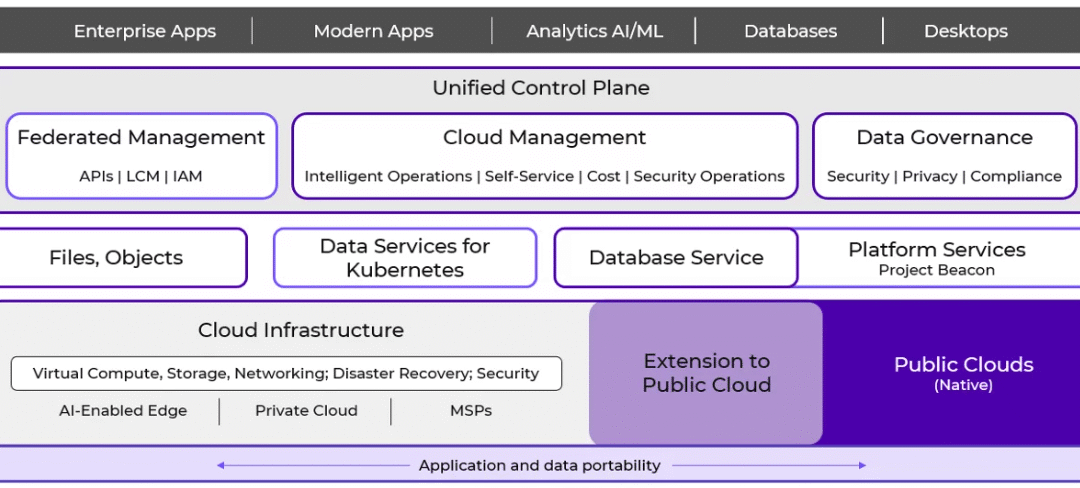
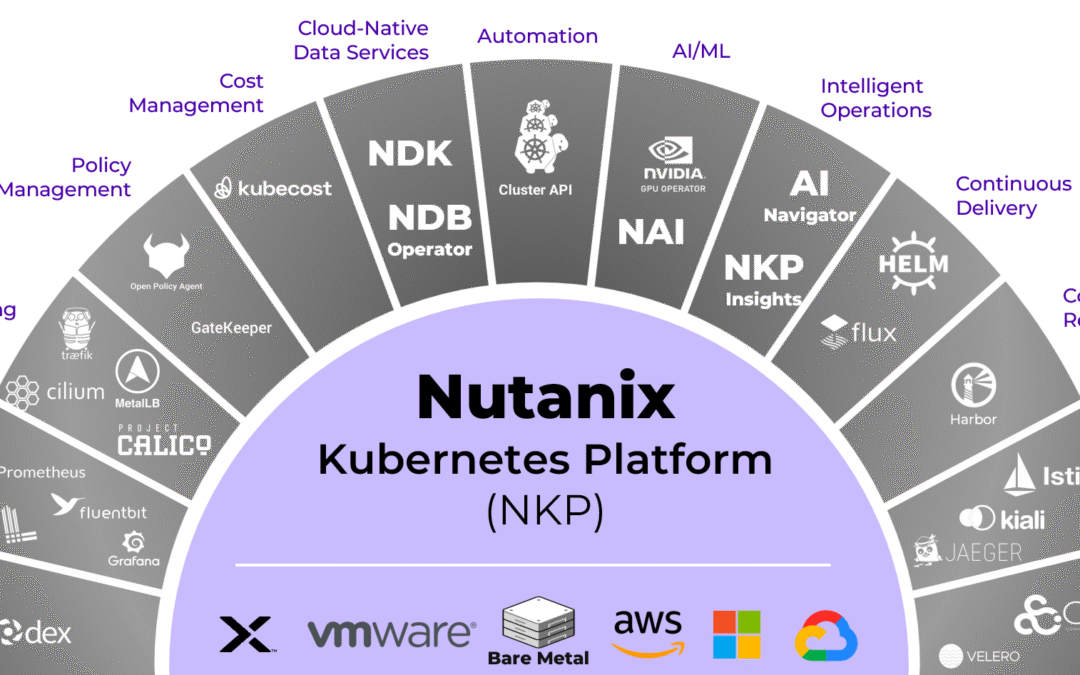
Nutanix provides a clean path into a Kubernetes-native, cloud-architected operational model through Nutanix Kubernetes Platform (NKP) and Nutanix Cloud Infrastructure (NCI) as the unified foundation.

Nutanix Kubernetes Platform Open Source

If an organization wants to build for the next generation of workloads rather than the last, platform migration becomes a strategic investment. And the cost of change is suddenly justified by the long-term trajectory.

AI becomes real. Sovereignty becomes mandatory.

Over the past year, enterprise AI has evolved from theory to a board-level priority. However, deploying secure, compliant, and controlled GenAI infrastructure is not something legacy stacks were designed for. GPU clusters, high-throughput storage, inference pipelines, and air-gapped architectures. All these require a platform that is not only modern, but sovereign, composable and operationally manageable.

Nutanix Enterprise AI

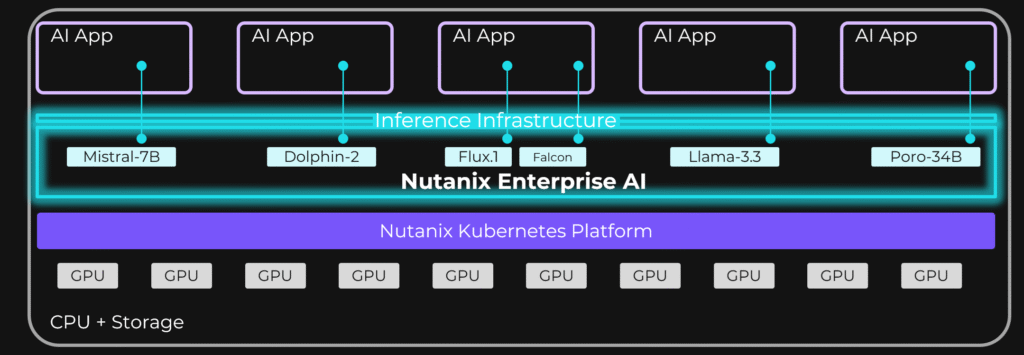
Nutanix offers a cohesive, GPU-ready, open ecosystem designed to host your own models, your own data, and your own AI stack.  Sovereign, isolated, and fully under your control.

Nutanix Enterprise AI (NAI) turns AI infrastructure into something deployable rather than experimental. Together with NCI and NKP, it forms an environment where customers can build internal AI factories without relying on hyperscalers or exposing sensitive data.

Flexibility in storage architecture

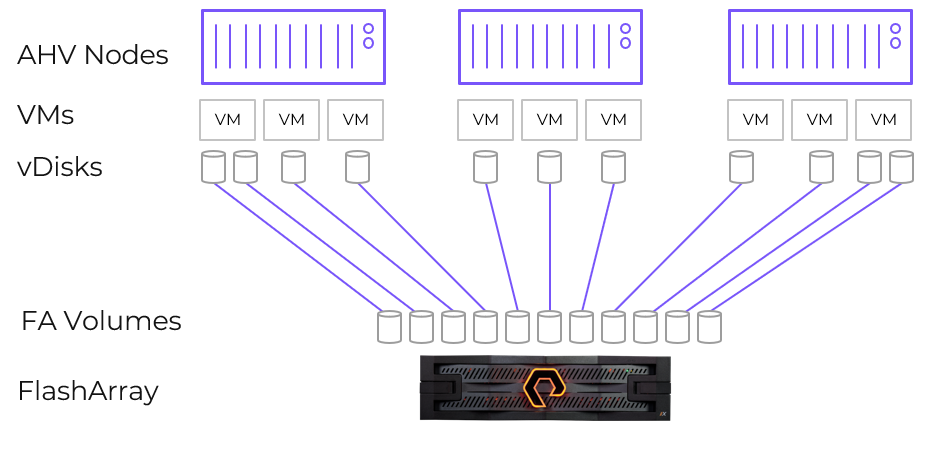
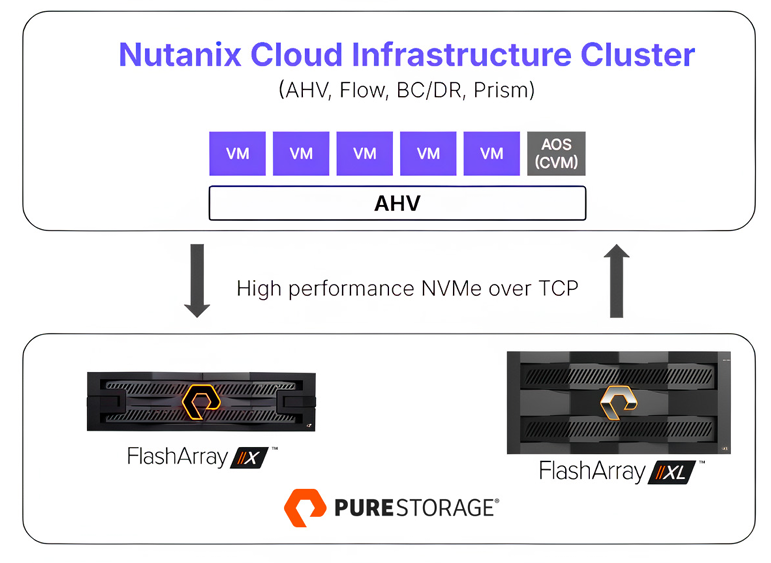
Recently, Nutanix announced support for external storage – starting with Dell and Pure Storage.

Nutanix and Pure Storage


For the first time, customers can bring their existing enterprise storage arrays into a Nutanix architecture without forcing a forklift replacement or abandoning multi-year investments.

This fundamentally changes the economics of a VMware-to-Nutanix transition. What used to be a full-stack change can now become an incremental evolution. Keep the storage infrastructure you already trust, maintain the performance characteristics your applications rely on, and modernize the compute and virtualization layer above it.

Nutanix is acknowledging that customers do not live in greenfield worlds, that not every journey starts with a clean slate, and that sovereignty and autonomy often require preserving existing assets rather than discarding them.

For customers who want to move away from VMware but cannot replace their storage systems, Nutanix now offers a transition path that aligns with financial and architectural realities. For customers planning application modernization or sovereign AI initiatives, the ability to combine dedicated storage arrays with NCI and NKP gives them the freedom to architect the right performance tiers for each workload without vendor lock-in.

Cost pressure meets VDI realities

Desktop virtualization has always been the domain where infrastructure complexity causes the most harm. VDI environments are sensitive, cost-intensive, and operationally unforgiving. If a customer is looking for a cheaper, simpler and more predictable platform for VDI, Nutanix becomes a compelling candidate and it offers an architectural shortcut by providing consolidated storage and compute, extremely fast storage performance, linear scaling, and dramatically simpler day-to-day operations. The cost-to-outcome ratio is hard to ignore.

Nutanix and Omnissa

In such scenarios, the platform transition is less about “leaving VMware” and more about optimizing the future economics of delivering virtual desktops with a more efficient stack.

Recently, Nutanix and Omnissa announced that Omnissa Horizon now fully supports Nutanix AHV.

Conclusion

Ultimately, the decision to move away from VMware (or any other vendor) should never be driven purely by frustration or speculation. It should be driven by clarity.

If the only goal is to continue exactly what you do today, with the same architecture and application landscape, then the cost of change often outweighs the benefits. Unless Broadcom pricing leaves no room for rational continuity.

Nutanix is about “accelerating”, and your decision shouldn’t be about “escaping”. And that distinction is what separates good decisions from expensive reactions.

When motivation is driven by evolution, Nutanix becomes a foundation for the next chapter of your digital strategy.

And that is exactly the moment when moving away from VMware begins to make profound sense.

Open source gives you freedom. Nutanix makes that freedom actually usable.

Open source gives you freedom. Nutanix makes that freedom actually usable.

Every organisation that wants to modernise its infrastructure eventually arrives at the same question: How open should my cloud be? Not open as in “free and uncontrolled”, but open as in transparent, portable, verifiable. Open as in “I want to reduce my dependencies, regain autonomy and shape my architecture based on principles”.

What most CIOs and architects have realized over time is that sovereignty and openness are not separate ideas. They depend on each other. And this is where Nutanix has become one of the most interesting players in the market. Because while many vendors talk about optionality, Nutanix has built a platform that is literally assembled out of open-source building blocks. That means curated, hardened, automated and delivered as a consistent experience.

It’s a structured open-source universe, integrated from day one and continuously maintained at enterprise quality.

In other words, Nutanix operationalizes open source, turning it into something teams can deploy, trust and scale without drowning in complexity.

Operationalizing Open Source

Every architect knows that adopting open source at scale is not trivial. The problem is not the software. The problem is the operational burden:

  • Which projects are stable?
  • Which versions are interoperable?
  • Who patches them?
  • Who maintains the lifecycle?
  • How do you standardize the cluster experience across sites, regions, and teams?
  • How do you avoid configuration drift?
  • How do you keep performance predictable?

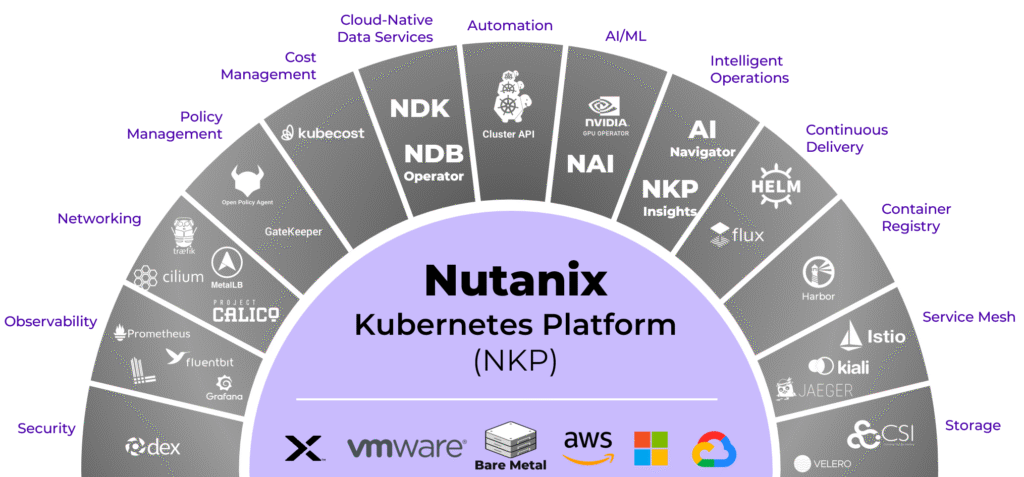
Nutanix solves this by curating the stack, integrating the components and automating the entire lifecycle. Nutanix Kubernetes Platform (NKP) is basically a “sovereignty accelerator”. It enables organizations to adopt a fully open ecosystem while maintaining the reliability and simplicity that enterprises require.

A Platform Built on Upstream Open Source

What often gets overlooked in the cloud-native conversation is that open source is not a single entity. There is upstream open source, which can be seen as the pure, community-driven version. And then there are vendor-modified forks, custom APIs, and platforms that quietly redirect you into proprietary interfaces the moment you start building something serious.

Nutanix took a very different path. NKP is built on pure upstream open-source components. Not repackaged, not modified into proprietary variants, not wrapped in a “special” vendor API that locks you in. The APIs exposed to the user are the same APIs used everywhere in the CNCF community.

This matters more than most people realize.

Because the moment a vendor alters an API, you lose portability. And the moment you lose portability, you lose sovereignty.

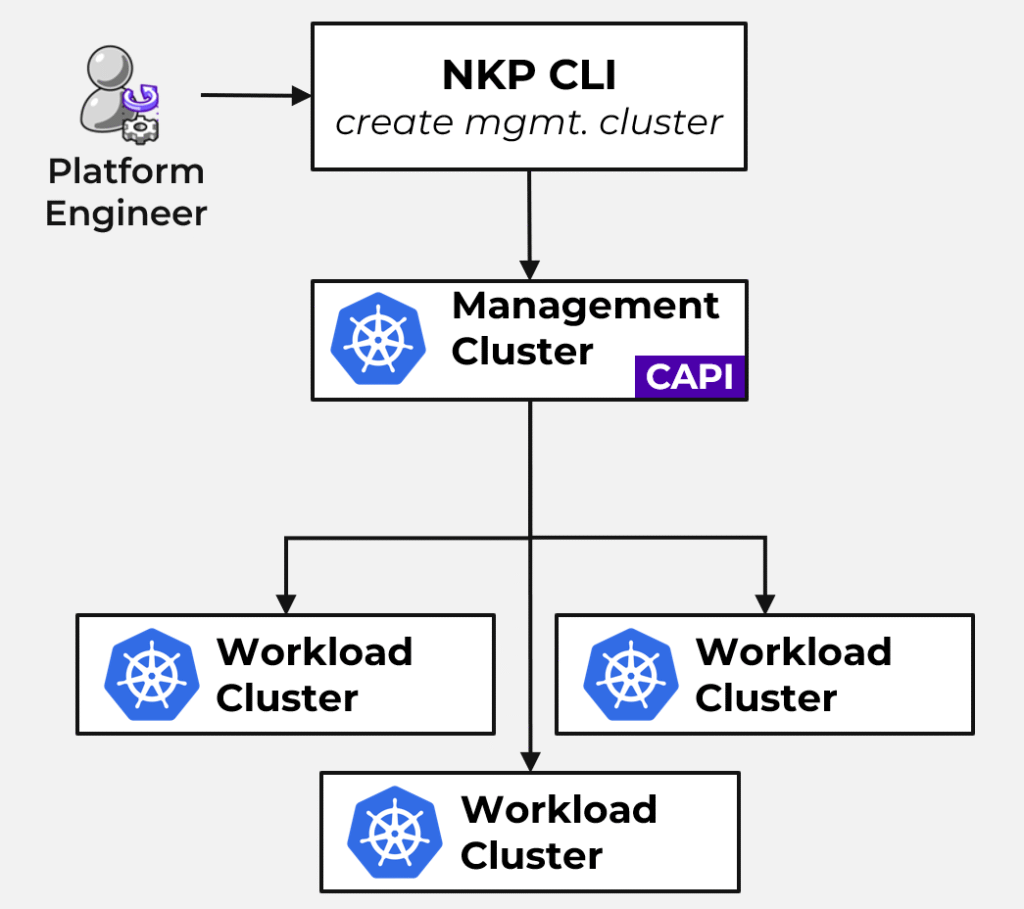
One of the strongest signals that Nutanix also prioritizes sovereignty, is its commitment to Cluster API (CAPI). This is what gives NKP deployments the portability many vendors can only talk about.

Nutanix Cluster API

With CAPI, the cluster lifecycle (creation, upgrade, scaling, deletion) is handled through a common, open standard that works:

  • on-premises & baremetal
  • on Nutanix
  • on AWS, Azure or GCP
  • in other/public sovereign cloud regions
  • at the edge

CAPI means your clusters are not married to your infrastructure vendor.

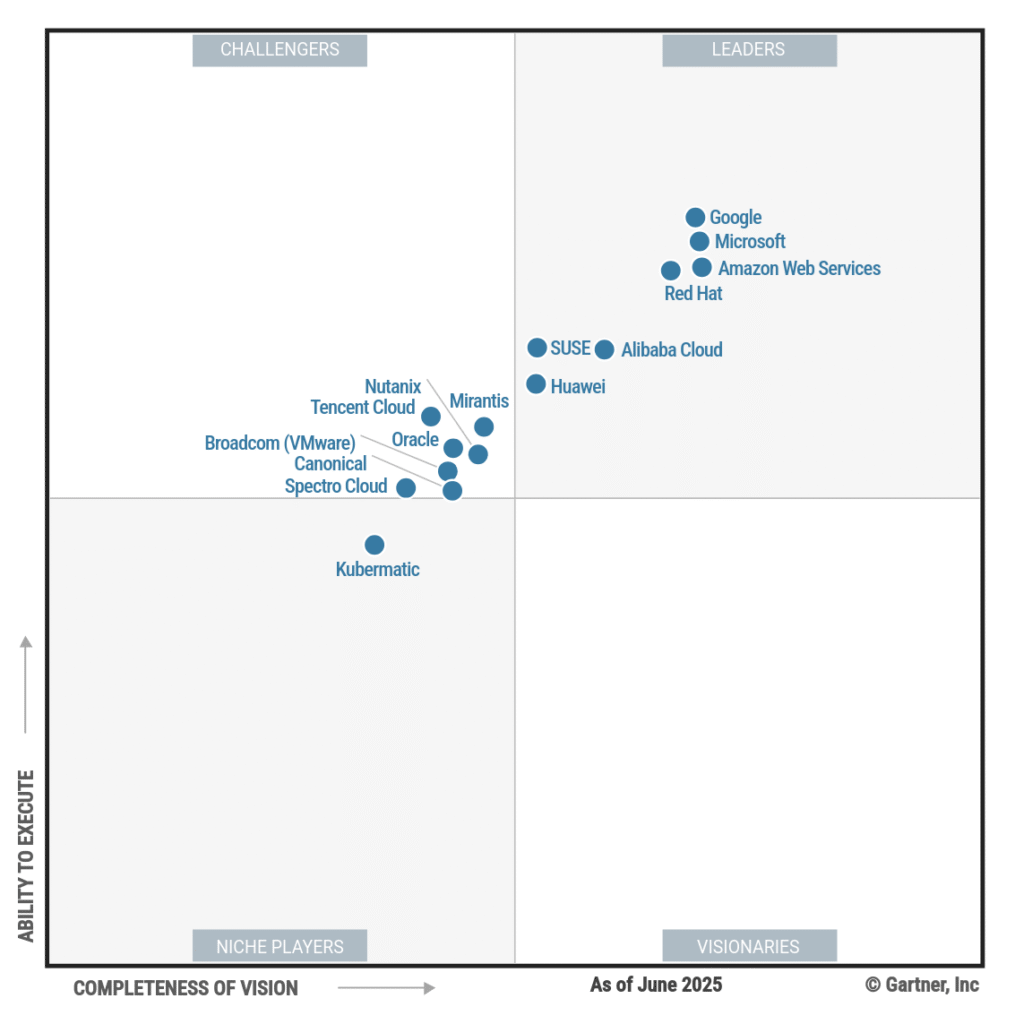
Nutanix Entered the Gartner MQ for Container Management 2025

Every Gartner Magic Quadrant tells a story. Not just about vendors, but about the direction a market is moving. And the 2025 Magic Quadrant for Container Management is particularly revealing. Not only because Nutanix appears in it for the first time, but because of where Nutanix is positioned and what that position says about the future of cloud-native platforms.

Nutanix made its debut as a Challenger and that’s probably a rare achievement for a first-time entrant. Interestingly and more importantly, Nutanix positioned above Broadcom (VMware) on both axes:

  • Ability to execute
  • Completeness of vision

Gartner Magic Quadrant for Container Management June 2025

2025 marks a new landscape – Broadcom fell out of the leaders quadrant entirely and now lags behind Nutanix in both execution and vision. This reflects a broader transition in customer expectations.

Organizations want portability, sovereign deployment models, and platforms that behave like products rather than collections of components. Nutanix delivered exactly that with NKP and gets recognized for that.

When Openness Becomes Strategy, Sovereignty Becomes Reality

If you step back and look at all the signals, from the rise of sovereign cloud requirements to the changes reflected in Gartner’s latest Magic Quadrant, a clear pattern emerges. The market is moving away from closed ecosystems, inflexible stacks and proprietary abstractions.

Vision today is no longer defined by how many features you can stack on top of Kubernetes. Vision is defined by how well you can make Kubernetes usable, secure, portable and sovereign. In the data center, at the edge, in public clouds, or in fully disconnected/air-gapped environments.
VMware by Broadcom – The Standard of Independence Has Become a Structure of Dependency

VMware by Broadcom – The Standard of Independence Has Become a Structure of Dependency

There comes a point in every IT strategy where doing nothing becomes the most expensive choice. Many VMware by Broadcom customers know this moment well, and they sense that Broadcom’s direction isn’t theirs, but still hesitate to move. The truth is, the real risk isn’t in changing platforms but waiting too long to reclaim control.

I have worked with VMware products for more than 15 years and even spent part of my career as a VMware solution engineer before Broadcom acquired this company. A company that once had a wonderful culture. A culture that, sadly, no longer exists. Many of my former colleagues no longer trust their leadership. What does this mean for you?

We know that VMware environments are mature, battle-tested, and deeply embedded into how enterprises operate. And that’s exactly the problem. Over the years, VMware became more than a platform. It became the language of enterprise IT with vSphere for compute, vSAN for storage, NSX for networking. It’s how we learned to think about infrastructure. That’s the vision of VMware Cloud Foundation (VCF) and the software-defined data center (SDDC).

Fast forward, even when customers are frustrated by cost increases, licensing restrictions, or shifting support models, they rarely act. Why? Because it feels safer to tolerate pain than to invite uncertainty. But stability is often just an illusion. What feels familiar isn’t necessarily secure.

The Forced Migration Nobody Talks About

The irony is that many customers who think they are avoiding change are actually facing one. Just not by choice. Broadcom’s current direction points toward a future where customers can only consume VMware Cloud Foundation (VCF) as a unified, integrated stack. Which, in general, is a good thing, isn’t it?

As a result, you no longer decide which components you actually need. Even if you only use vSphere, vSAN, and Aria Operations today, you will be licensed and forced to deploy the full stack, including NSX and VCF Operations/Automation, whether you need them or not. While that’s still speculation, everything Hock Tan says points in this direction. And many analysts see it the same way.

Broadcom reached VMware’s goal: VCF has become their flagship product, but only by force and not by the customer’s choice. Broadcom has leverage by choosing the right discounts to make VCF the “right” and only choice for customers, even if they don’t want to adopt the full stack.

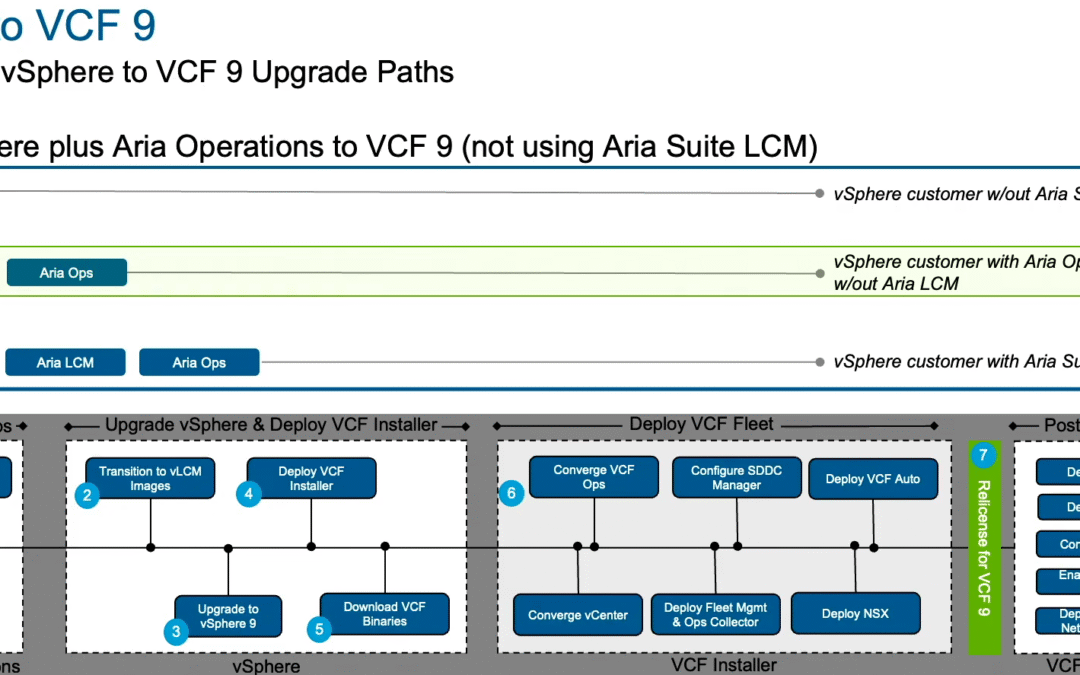
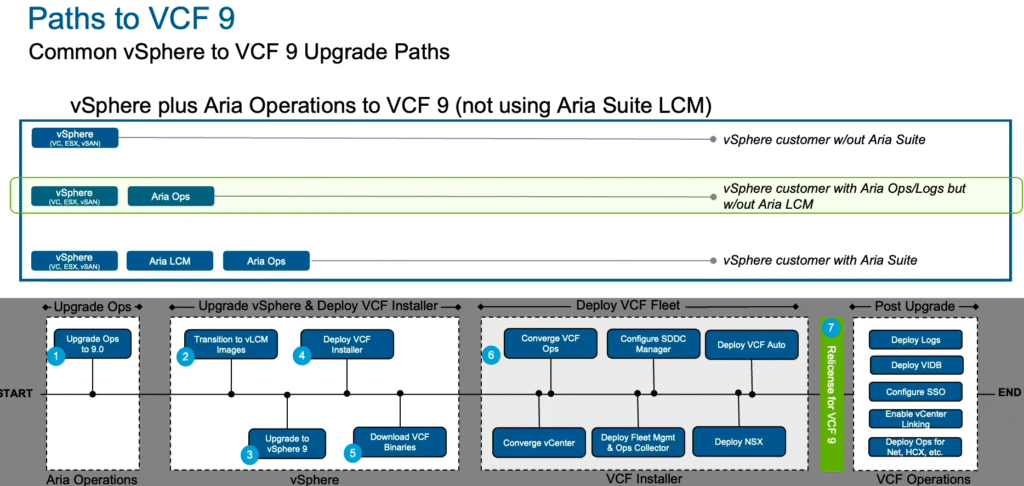
Paths to VCF 9

What does this mean for your future? In practice, it’s a structural migration disguised as continuity and not just a commercial shift. Moving from a traditional vSphere or HCI-based setup to VCF comes with the same side effects, changes, and costs you would face when adopting a new platform (Nutanix, Red Hat, Azure Local etc.).

Think about it: If you must migrate anyway, why not move toward more control, not less?

Features, Not Products

Broadcom has been clear about its long-term vision. The company now describes VMware Cloud Foundation as the only product name. They see it as the operating system for data centers, which is a great message, but Broadcom wants VMware to operate like Azure, where you don’t “buy” networking or storage. You consume them as built-in features of the platform.

Once this model is fully implemented, you won’t purchase vSphere or NSX. You’ll subscribe to VCF, and those technologies will simply be features. The Aria Suite has already disappeared from the portfolio (example: Aria Operations became VCF Operations). The next product to vanish will be everything except the name VMware Cloud Foundation.

It’s a clever move for Broadcom, but a dangerous one for customers. Yes, I am looking at you. Because when every capability becomes part of a single subscription, the flexibility to choose or not to use disappears. This means your infrastructure, once hybrid and modular, is now a monolith. Imagine the lock-in of any hyperscaler, but on-premises. That’s the new VMware.

The True Cost of Change

Let’s be honest, migrations are not easy. They require time, expertise, and courage. Yes, courage as well. But the cost of change is not the real problem. The cost of inaction is.

When organizations stay on platforms that no longer align with their strategy, they pay with flexibility, not just money. Every renewal locks in another year(s) of dependency. Every delay potentially pushes innovation further out of reach. And with Broadcom’s model, the risk isn’t just financial. The control over your architecture, your upgrade cadence, your integrations, and even your licensing terms slowly moves away from you. And faster than you may think.

VCF SPD November 2025

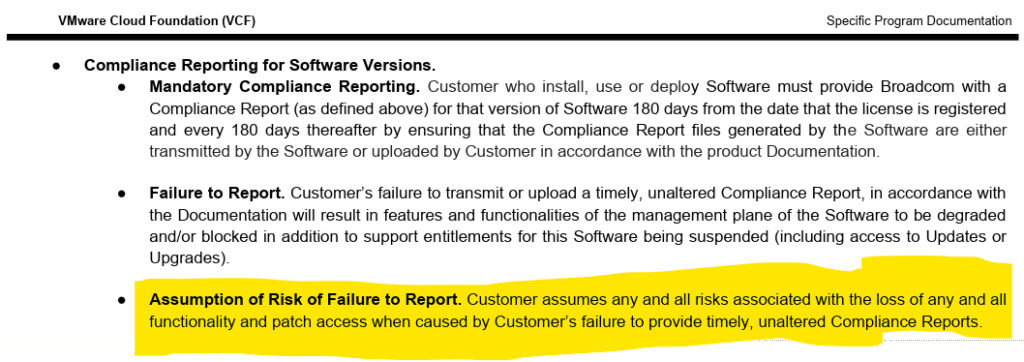
Broadcom’s new compliance mechanisms amplify that dependency. According to the November 2025 VCF Specific Program Documentation, customers must upload a verified compliance report every 180 days. Failing to do so allows Broadcom to degrade or block management-plane functionality and suspend support entitlements. What once was a perpetual license has become an always-connected control loop. A system that continuously validates, monitors, and enforces usage from the outside. Is that okay for a “sovereign” cloud or you as the operator?

As Hock Tan , our President and CEO, shared in today's General Session at  VMware Explore Barcelona, European customers want control over their data  and processes. | Broadcom

You don’t notice it day by day. But five years later, you realize: Your data center doesn’t belong to you anymore.

Why Change Feels Bigger Than It Is

Anyway, change is often perceived as a massive technical disruption. But in reality, it’s usually a series of small, manageable steps. Modern infrastructure platforms have evolved to make transitions far less painful than before. Today, you can migrate workloads gradually, reuse existing automation scripts, and maintain uptime while transforming the foundation beneath.

What used to be a twelve-month migration project can now be done in phases, with full visibility and reversible checkpoints. The idea is not to replace everything. It’s to regain control, layer by layer.

Freedom as a Strategy

Freedom should be a design principle. It means having a platform that lets you choose, and it also means being able to decide when to upgrade, how to scale, and where your data lives, without waiting for a vendor’s permission.

This is why I joined Nutanix. They don’t force you into a proprietary stack. They abstract complexity instead of hiding it. They allow you to run what you need, and only what you need, whether that’s virtualization, containers, or a mix of both. Yep, and you can also provide DBaaS (NDB) or a private AI platform (NAI).

I’m not telling you to abandon what you know. Take a breath and think about what’s possible when choice returns.

For years, VMware has been the familiar home of enterprise IT. But homes can become cages when you are no longer allowed to move the furniture. The market is moving towards platforms that combine the comfort of virtualization with the agility of cloud without the loss of control.

This shift is already happening. Many organizations start small – with their disaster recovery site, their dev/test environment, or their EUC workloads. Once the first step is done, confidence grows. They realize that freedom doesn’t come from ripping everything out. It comes from taking back control, one decision at a time.

A Quiet Revolution

The next chapter of enterprise infrastructure will not be written by those who cling to the past, but by those who dare to redesign their foundations. Not because they want to change, but because they must to stay agile, compliant, and sovereign in a world where autonomy is everything.

The legal fine print makes it clear. What Broadcom calls modernization is, in fact, a redesign of control. And control rarely moves back to the customer once it’s gone.

The question is no longer “Can we afford to change?”

It should be “Can we afford not to?”. Can YOU afford not to?

And maybe that’s where your next journey begins. Not with fear, but with the quiet confidence that the time to regain control has finally arrived.

Why I Left Oracle and Joined Nutanix

Why I Left Oracle and Joined Nutanix

There are moments in a career when you stop and realise that the path beneath your feet is no longer the path you set out to walk. Sometimes the change is subtle, almost invisible and other times it becomes impossible to ignore. For me, this moment arrived somewhere between large public sector strategy discussions, another round of organizational changes, and one more conversation about “global priorities” that had little connection to the needs of Swiss or European sovereign infrastructure.

I spent a meaningful year at Oracle. I met great people and learned what it means to bring a (dedicated) hyperscale cloud into regulated environments. OCI Dedicated Region is still one of the most interesting and ambitious engineering efforts in the cloud industry. But at some point, I realized that my personal mission of digital sovereignty, open choice, and the empowerment of customers started to diverge from where I felt the company was going.

Not wrong. Not bad. Just different. And that difference grew large enough that it became impossible to pretend we were still walking in the same direction.

Sovereignty has always been my north star

Years before Oracle, long before the idea of sovereign clouds became a political agenda, I cared about the question of who controls technology. My time at VMware shaped that perspective deeply. Private cloud, infrastructure independence, and the ability for organizations to define their own architecture rather than renting someone else’s world.

Even during my time at Oracle, I continued to view everything through that sovereignty lens. Dedicated Region was my way of reconciling public cloud innovation with local control, which is a compelling proposition in many cases. But it became increasingly clear to me that the broader industry narrative was drifting toward full-stack centralization. Clouds wanted to become operating systems. Platforms wanted to become monopolies. The idea that customers deserve autonomy was becoming a footnote.

At some point, you have to ask yourself: Are you still aligned with the direction of travel, or are you just trying to keep up even though you know you want something else?

Realizing that it was time to step off the path

There is no single moment that triggered my decision to leave. It was more like a slow accumulation of signals. My conversations increasingly shifted from “how do we empower customers?” to “how do we position the stack?”. The freedom and creativity I had in the early days of promoting sovereign cloud initiatives felt narrower over time. And internally, I caught myself spending more energy explaining why sovereignty matters than building solutions around it.

If your work becomes a negotiation with your own values, you eventually reach a point where you must choose. Stay and adapt, or step forward and realign.
I chose alignment.

Why private cloud again?

When you think deeply about sovereignty, you eventually come to the simple truth that sovereignty does not happen by accident. It is not a checkbox, a certificate, or a location of a data center. Sovereignty is an architectural stance. A design choice. A commitment to decentralization, reversibility, and customer control.

And that is where private cloud becomes relevant again as the foundation for a new era of controlled autonomy.

The more the world embraces hyperscale convenience, the more valuable real control becomes. The more cloud platforms abstract everything away, the more important it becomes to own the layers that matter. The more AI, data, and national infrastructure rely on cloud services, the more essential locally governed, locally designed, locally operable environments become.

Private cloud, done right, is a rebalancing of power.

Why Nutanix was the logical next chapter

If you want to work on digital sovereignty in a way that is meaningful, credible, and technically grounded, there are only a handful of companies where that mission is more than a marketing line. Nutanix is one of them and arguably the most aligned with the idea of customer freedom.

Nutanix sits in a unique space. It is an infrastructure platform that modernizes private cloud while keeping openness at the center. It doesn’t force customers into a predefined world and it creates the foundation upon which customers can build their own.
Choice becomes real again. Migration paths become optional rather than forced. Hybrid and multi-cloud become strategies instead of slogans. And customers regain something that hyperscale economics has quietly eroded for years. Yep, the right to decide their own future.
What I found at Nutanix is a philosophy that echoes my own. Technology should not dictate. It should enable. It should adapt to the customer, not the other way around. It should enhance sovereignty rather than dilute it behind yet another managed layer. And it should make modernization possible without making independence impossible.

Stepping into a mission, not just a new job

Leaving Oracle was not an escape. It was a conscious return to the principles that have guided me for more than a decade. I joined Nutanix not because it is fashionable, but because it represents the next phase of what the infrastructure world needs. A platform that gives power back to the organisations that increasingly rely on technology for national, economic, and operational resilience.

Modernisation should not mean giving up autonomy. Cloud adoption should not mean losing choice. Future architectures should not be designed by someone else’s business model.

Nutanix brings the balance back. It brings control back. It brings the freedom to design infrastructure on your terms.

And that is where I want to contribute. That is where I want to help customers. That is the path I want to walk.

Final Words

This move means a realignment with my own principles and the narrative I want to push into the market. The next decade will belong to organizations that understand this early and build accordingly.

I want to help shape that decade with customers, partners, policymakers, and anyone who believes that the future of infrastructure must be both modern and self-determined.

Leaving Oracle was the end of a chapter. Joining Nutanix is the continuation of a mission.

And for the first time in a long time, I feel like I am walking exactly where I am supposed to be.