Last year at VMworld 2021, VMware mentioned and announced a lot of (new) projects they are working on. What happened to them and which new VMware projects have been mentioned this year at VMware Explore so far?
Project Ensemble – VMware Aria Hub
VMware unveiled their unified multi-cloud management portfolio called VMware Aria, which provides a set of end-to-end solutions for managing the cost, performance, configuration, and delivery of infrastructure and cloud native applications.
VMware Aria is anchored by VMware Aria Hub (formerly known as Project Ensemble), which provides centralized views and controls to manage the entire multi-cloud environment, and leverages VMware Aria Graph to provide a common definition of applications, resources, roles, and accounts.
VMware Aria Graph provides a single source of truth that is updated in near-real time. Other solutions on the market were designed in a slower moving era, primarily for change management processes and asset tracking. By contrast, VMware Aria Graph is designed expressly for cloud-native operations.
Project Arctic has been introduced last year as a Technology Preview and was described as “the next step in the evolution of vSphere in a multi-cloud world”. What has started with the idea of bringing VMware Cloud services closer to vSphere, has evolved to a even more interesting and enterprise-ready version called vSphere+ and vSAN+. It includes developer services that consist of the Tanzu Kubernetes Grid runtime, Tanzu Mission Control Essentials and NSX Advanced Load Balancer Essentials. VMware is going to add more and more VMware Cloud add-on services in the future. Additionally, VMware even introduced VMware Cloud Foundation+.
Project Iris – Application Transformer for VMware Tanzu
VMware mentioned Project Iris very briefly last year at VMworld. In February 2022, Project Iris became generally available and is since then known as Application Transformer for VMware Tanzu.
Project Northstar
At VMware Explore on day 1, VMware introduced Project Northstar, which will provide customers a centralized cloud console that gives them instant access to networking and security services, such as network and security policy controls, Network Detection and Response (NDR), NSX Intelligence, Advanced Load Balancing (ALB), Web Application Firewall (WAF), and HCX. Project Northstar will be able to apply consistent networking and security policies across private cloud, hybrid cloud, and multi-cloud environments.
At VMware Explore on day 1,VMware unveiled Project Watch, a new approach to multi-cloud networking and security that will provide advanced app-to-app policy controls to help with continuous risk and compliance assessment. In technology preview, Project Watch will help network security and compliance teams to continuously observe, assess, and dynamically mitigate risk and compliance problems in composite multi-cloud applications.
Project Trinidad
Also announced at VMware Explore day 1 and further explained at day 2, Project Trinidad extends VMware’s API security and analytics by deploying sensors on Kubernetes clusters and uses machine learning with business logic inference to detect anomalous behavior in east-west traffic between microservices.
Project Trinidad just dropped from @vmwocto xLabs! This project is near and dear to my heart! (Happy Independence Day 🇹🇹!!! 😉)
Project Narrows introduces a unique addition to Harbor, allowing end users to assess the security posture of Kubernetes clusters at runtime. Images previously undetected, will be scanned at the time of introduction to a cluster, so vulnerabilities can now be caught, images may be flagged, and workloads quarantined.
Project Narrows adding dynamic scanning to your software supply chain with Harbor is critical. It allows greater awareness and control of your running workloads than the traditional method of simply updating and storing workloads.
VMware is open sourcing the initial capabilities of Project Narrows on GitHub as the Cloud Native Security Inspector (CNSI) Project.
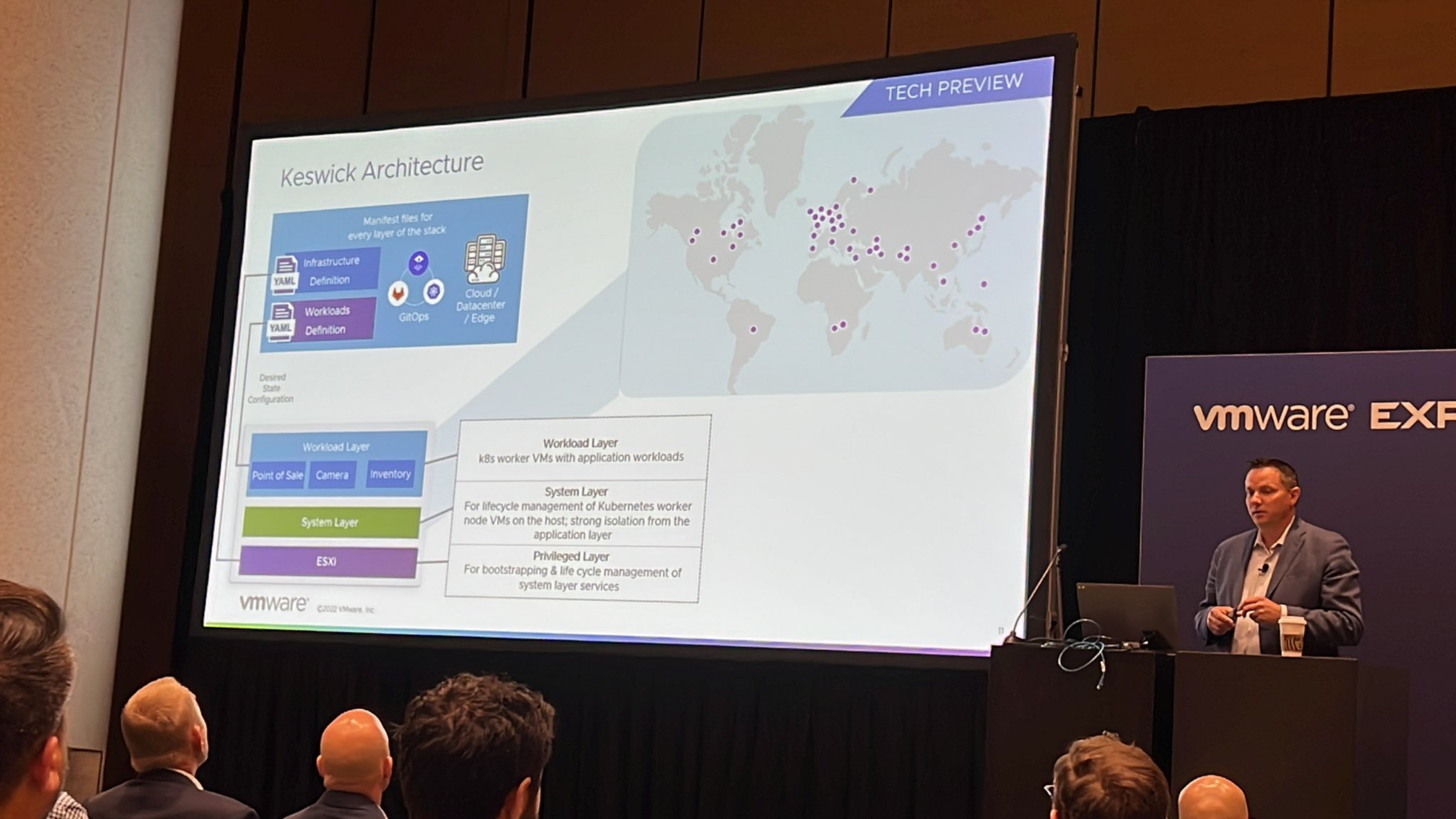
Also introduced on day 2, Project Keswick is about simplifying edge deployments at scale. It comes as an xLabs project coming out of the Advanced Technology Group in VMware’s Office of the CTO.
A Keswick deployment is entirely automated and uses Git as a single source of truth for a declarative way to manage your infrastructure and applications through desired state configuration enabled by GitOps. This ensures the infrastructure and applications running at the edge are always exactly what they need to be.
At VMware Explore 2022 day 2, VMware demonstrated what they believe to be the world’s first quantum-safe multi-cloud application!
VMware developed and presented Project Newcastle, a policy-based framework enabling and orchestrating cryptographic transition in modern applications.
Integrated with Tanzu Service Mesh, Project Newcastle gives users greater insight into the cryptography in their applications. But that’s not all — as a platform for cryptographic agility, Project Newcastle automates the process of reconfiguring an application’s cryptography to comply with user-defined policies and industry standards.
Closing Comment
Which VMware projects excite you the most? I’m definitely going with Project Ensemble (Aria Hub) and Project Newcastle!
VMworld is now VMware Explore and is currently happening in San Francisco! This is a consolidated of the announcements from day 1 (August 30th, 2022).
VMware Introduces vSphere 8, vSAN 8 and VMware Cloud Foundation+
VMware today introduced VMware vSphere 8 and VMware vSAN 8—major new releases of VMware’s compute and storage solutions.
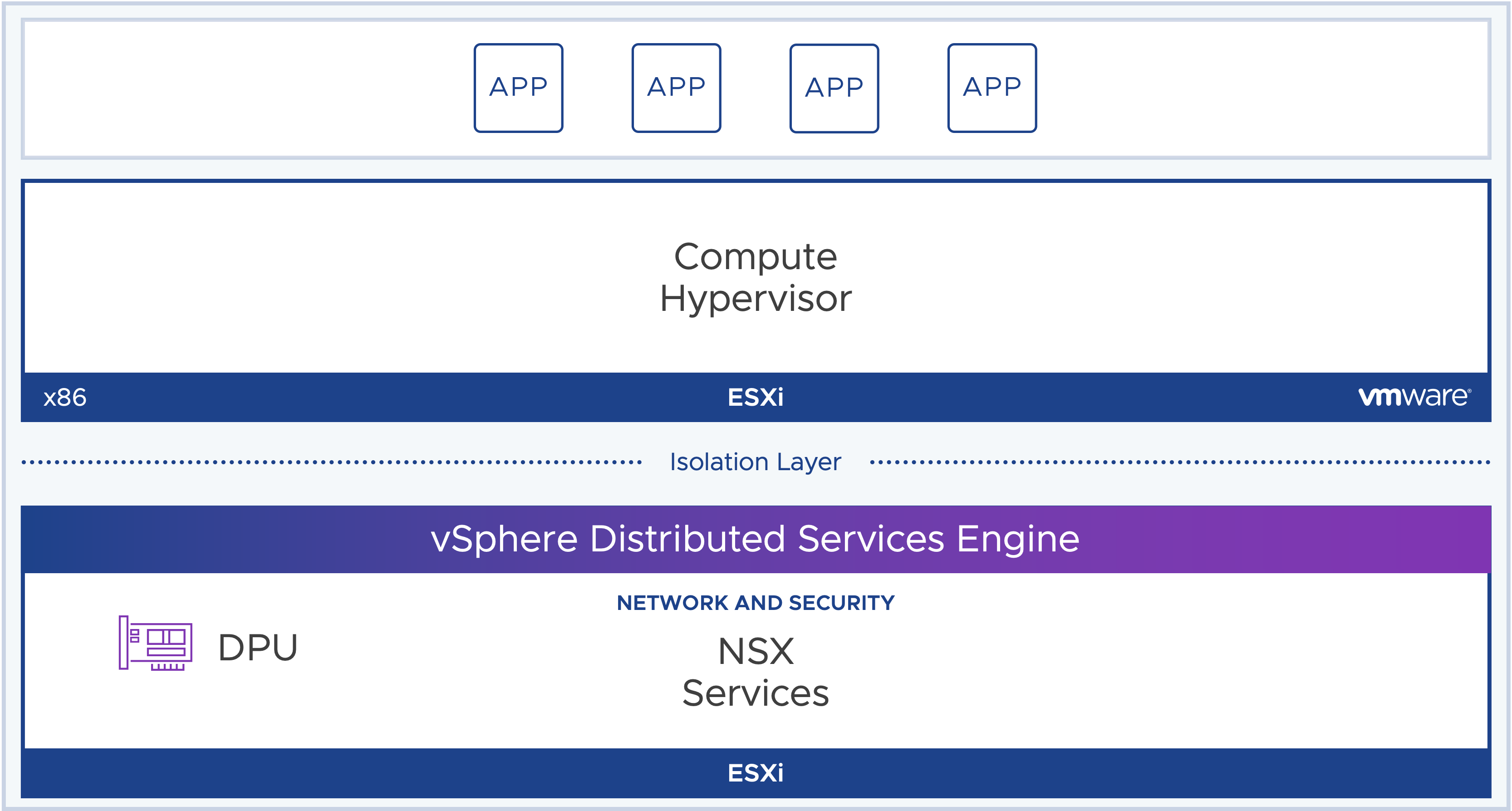
vSphere 8 – vSphere 8 introduces vSphere on DPUs, previously known as Project Monterey. In close collaboration with technology partners AMD, Intel and NVIDIA as well as OEM system partners Dell Technologies, Hewlett Packard Enterprise and Lenovo, vSphere on DPUs will unlock hardware innovation helping customers meet the throughput and latency needs of modern distributed workloads. vSphere will enable this by offloading and accelerating network and security infrastructure functions onto DPUs from CPUs.
vSphere 8 will dramatically accelerate AI and machine learning applications by doubling the virtual GPU devices per VM, delivering a 4x increase of passthrough devices, and supporting vendor device groups which enable binding of high-speed networking devices and the GPU.
vSAN 8: vSAN 8 introduces breakthrough performance and hyper-efficiency. Built from the ground up, the new vSAN Express Storage Architecture (ESA) will enhance the performance, storage efficiency, data protection and management of vSAN running on the latest generation storage devices. vSAN 8 will provide customers with a future ready infrastructure that supports modern TLC storage devices and delivers up to a 4x performance boost.
VMware Cloud Foundation+ – VMware introduces a new cloud-connected architecture for managing and operating full stack HCI in data centers. Built on vSphere+ and vSAN+, VMware Cloud Foundation+ will add a new cloud-connected architecture for managing and operating full-stack HCI in our data center or co-location facility.
VMware Cloud Foundation+ will deliver new admin, developer and hybrid cloud services through a simplified subscription model and keyless entitlement. VMware Cloud Foundation 4.5 will enable VMware Cloud Foundation+ by adding vSphere+ and vSAN+, plus a cloud gateway that provides access to the VMware Cloud Console as part of the full stack architecture.
VMware Cloud for Hyperscalers
VMC on AWS – Amazon Elastic Compute Cloud (Amazon EC2) I4i instances for I/O-intensive Workloads: Powered by 3rd generation Intel® Xeon® Scalable processors (Ice Lake), Amazon EC2 instances help deliver better workload support and delivery, lower TCO, and increased scalability and application performance. Compared to I3, the I4i instances provide nearly twice the number of physical cores, twice the memory, three times the storage capacity, and three times the network bandwidth.
Amazon FSx for NetApp ONTAP Integration Availability – as a native AWS cloud storage service that is certified as a supplemental datastore for VMware Cloud on AWS, FSx for ONTAP offers fully managed shared storage built on the familiar NetApp ONTAP file system trusted by VMware customers running on premises today. Customers can now use FSx for ONTAP as a simple and elastic datastore for VMware Cloud on AWS, enabling them to scale storage up or down independently from compute while paying only for the resources they need.
VMware Cloud Flex Storage Availability – A new VMware-managed and natively integrated cloud storage and data management solution that offers supplemental datastore-level access for VMware Cloud on AWS. With just a few clicks in the VMware Cloud Console, customers can scale their storage environment without adding hosts, and elastically adjust storage capacity up or down as needed for every application. Customers also benefit from a simple, pay-as-you-consume pricing model. Together with VMware vSAN, VMware Cloud Flex Storage offers flexibility and customer value in terms of resilience, performance, scale, and cost in the cloud.
VMware Cloud Flex Compute – “Preview” of a new cloud compute model that will help customers get started faster with VMware Cloud on AWS. With this new model, VMware introduces a “resource-defined” cloud compute model in place of “hardware-defined” compute instance model which will provide customers higher flexibility, elasticity, and speed to better meet cost and performance requirements of enterprise applications. It will help customers get started faster with VMware Cloud on AWS by using smaller consumable units.
Oracle Cloud VMware Solution – New features and capabilities with VMware Tanzu Standard Edition and introduced support for single host SDDCs for non-production workloads.
VMware Cloud Management – VMware Aria
VMware unveiled a multi-cloud management portfolio called VMware Aria, which provides a set of end-to-end solutions for managing the cost, performance, configuration, and delivery of infrastructure and cloud native applications.
VMware Aria is a new brand for the vRealize components, Tanzu Observability by Wavefront and CloudHealth unified under one umbrella, one name.
The VMware products and services within the VMware Aria portfolio are:
VMware Aria is anchored by VMware Aria Hub (formerly known as Project Ensemble), which provides centralized views and controls to manage the entire multi-cloud environment, and leverages VMware Aria Graph to provide a common definition of applications, resources, roles, and accounts.
VMware Aria Graph provides a single source of truth that is updated in near-real time. Other solutions on the market were designed in a slower moving era, primarily for change management processes and asset tracking. By contrast, VMware Aria Graph is designed expressly for cloud-native operations.
VMware Aria provides features and functions that span management disciplines and clouds to deliver unique value for multi-cloud governance, cross-cloud migration, and actionable business insights. In addition, there are three new end-to-end management services built on top of VMware Aria Hub and VMware Aria Graph:
VMware Aria Guardrails – Automate enforcement of cloud guardrails for networking, security, cost, performance, and configuration at scale for multi-cloud environments with an everything-as-code approach
VMware Aria Migration – Accelerate and simplify the multi-cloud migration journey by automating assessment, planning, and execution in conjunction with VMware HCX
VMware Aria Business Insights – Discern relevant business insights from full-stack event correlation leveraging AI/ML analytics
Networking and Security
Project Northstar – Project Northstar is a SaaS-based network and security offering that will empower NSX customers with a set of on-demand multi-cloud networking and security services, end-to-end visibility, and controls. Customers will be able to use a centralized cloud console to gain instant access to networking and security services, such as network and security policy controls, Network Detection and Response (NDR), NSX Intelligence, Advanced Load Balancing (ALB), Web Application Firewall (WAF), and HCX. It will support both private cloud and VMware Cloud deployments running on public clouds and enable enterprises to build flexible network infrastructure that they can spin up and down in minutes.
DPU-based Acceleration for NSX – Formerly known as Project Monterey, VMware announced that starting with NSX 4.0 and vSphere 8.0, customers can leverage DPU-based acceleration using SmartNICs. Offloading NSX services to the DPU can accelerate networking and security functions without impacting the host CPUs, addressing the needs of modern applications and other network-intensive and latency-sensitive applications.
Project Trinidad – Available as tech preview, Project Trinidad extends VMware’s API security and analytics by deploying sensors on Kubernetes clusters and uses machine learning with business logic inference to detect anomalous behavior in east-west traffic between microservices.
Project Watch – VMware unveiled Project Watch, a new approach to multi-cloud networking and security that will provide advanced app-to-app policy controls to help with continuous risk and compliance assessment. In technology preview, Project Watch will help network security and compliance teams to continuously observe, assess, and dynamically mitigate risk and compliance problems in composite multi-cloud applications.
Additionally, VMware NSX Advanced Load Balancer adds new bot management capabilities to help enterprises address threats quickly and efficiently, providing enhanced multi-layer application protection with existing Web Application Firewall, DDoS protection, and API security.
Edge
VMware Edge Compute Stack 2.0 – VMware announced the VMware Edge Compute Stack v1.0 last year and is now adding more features and functionalities optimized for different use cases at the enterprise edge – shipped with vSphere 8 and Tanzu Kubernetes Grid 2.0. VMware, for the first time, will introduce initial support for non-x86 processor-based specialized small form factor edge platforms to simultaneously run IT/OT workloads and workflows on a single stack.
VMware Private Mobile Network (Beta) – Delivered by service providers, this new managed service offering provides enterprises with private 4G/5G mobile connectivity in support of edge-native applications. VMware will empower partners with a single PMN orchestrator to operate multi-tenant private 4G/5G networks with an enterprise-grade solution.
Modern Applications (VMware Tanzu)
Tanzu Application Platform – VMware pre-announced new Tanzu Application Platform (TAP) 1.3 capabilities like the availability on RedHat OpenShift or the support for air-gapped installations for regulated and disconnected environments.
Tanzu Kubernetes Grid – With the release of TKG 2.0, VMware now includes a unified experience for applications running on any cloud. In the near future, Tanzu Kubernetes Grid 2.0 should support both Supervisor-based and VM-based management cluster models. On vSphere 8, both Supervisor-based and VM-based models will be supported, and VM-based management clusters will continue to be available on previous versions of vSphere and public clouds. This means in other words, that VMware continues with their “TKGS” and “TKGm” flavors.
Support for customer-owned enterprise certificate authority through integration with Venafi
Improved security with enterprise-approved container image registries, data services support, external services support
and a global SLO dashboard that allows developers and site-reliability engineers to view all managed service SLOs, helping with capacity planning, troubleshooting, and understanding the health of their applications.
VMware unveiled how it is advancing self-configuring, self-healing and self-securing outcomes across four key technology areas that are delivered by the Anywhere Workspace platform:
VDI and DaaS
Digital Employee Experience
Unified Endpoint Management
Security
VMware is introducing a next generation of VMware Horizon Cloud that will enable multi-cloud agility and flexibility. This new release represents a major update to Horizon Cloud on Microsoft Azure that can dramatically simplify the infrastructure that needs to be deployed inside customer environments, reducing infrastructure costs in some cases by over 70% while increasing scalability and reliability of VMware’s DaaS platform.
Workspace ONE UEM’s Freestyle Orchestrator will be expanding to include support for mobile devices.
Workspace ONE support for Windows OS multi-user mode is now available in Tech Preview for Azure Active Directory-based deployments; and it will soon be extended to Active Directory-based deployments.
VMware also announced the coming tech preview of Workspace ONE Cloud Marketplace, which will feature dashboards, widgets, reports, Freestyle Orchestrator workflows, and other resources that can be imported to help customers adopt additional solutions.
Horizon Managed Desktop – I am very excited about this announcement, because it will provide a managed service offering that takes care of lifecycle services, support, and more, on top of a customer-provided infrastructure. This will help customers that don’t have in-house experts get to value with VDI faster.
Availability
VMware Cloud Foundation+, VMware vSphere 8, VMware vSAN 8 and VMware Edge Compute Stack 2.0 are all expected to be available by October 28, 2022 (the close of VMware’s Q3 FY23). VMware Private Mobile Network is expected to be available in beta in VMware’s Q3 FY23.
Closing Comment
Not bad for the first day, right? Stay tuned for more exciting VMware Explore announcements!
I am finally taking the time to write this piece about interclouds, workload mobility and application portability. Some of my engagements during the past four weeks led me several times to discussions about interclouds and workload mobility.
Cloud to Cloud Interoperability and Federation
Who has thought back in 2012 that we will have so many (public) cloud providers like AWS, Azure, Google Cloud, IBM Cloud, Oracle Cloud etc. in 2022?
10 years ago, many people and companies were convinced that the future consists of public cloud infrastructure only and that local self-managed data centers are going to disappear.
This vision and perception of cloud computing has dramatically changed over the past few years. We see public cloud providers stretching their cloud services and infrastructure to large data centers or edge locations. It seems they realized, that the future is going to look differently than a lot of people anticipated back then.
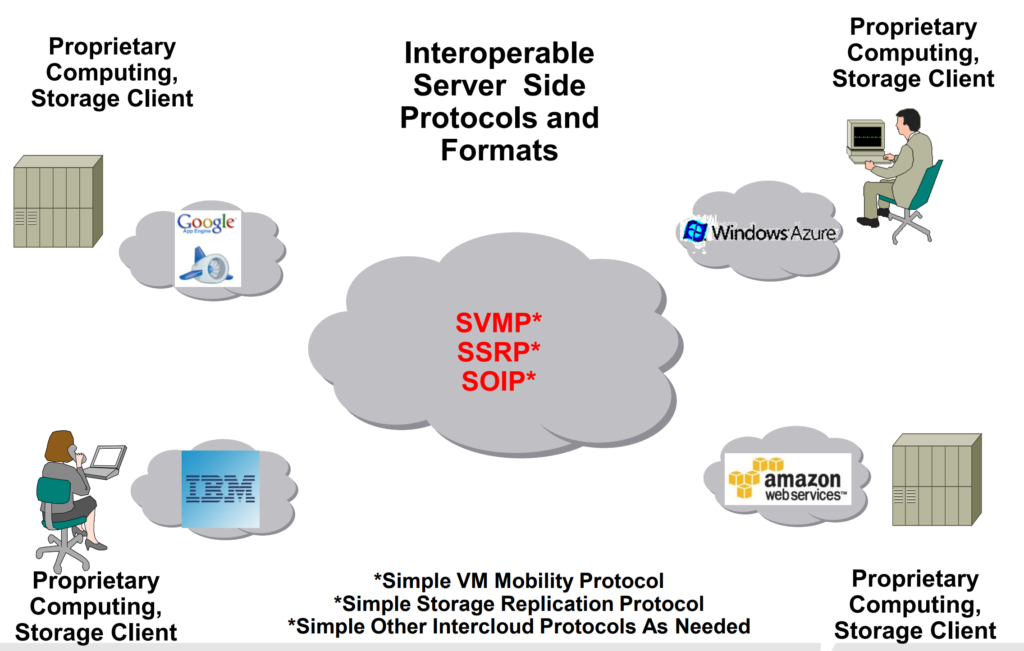
I was not aware that the word “intercloud” and the need for it exists for a long time already apparently. Let’s take David Bernstein’s presentation as an example, which I found by googling “intercloud”:
This presentation is about avoiding the mistake of using proprietary protocols and cloud infrastructures that lead to silos and a non-interoperable architecture. He was part of the IEEE Intercloud Working Group (P2302) which was working on a standard for “Intercloud Interoperability and Federation (SIIF)” (draft), which mentioned the following:
Currently there are no implicit and transparent interoperability standards in place in order for disparate cloud computing environments to be able to seamlessly federate and interoperate amongst themselves. Proposed P2302 standards are a layered set of such protocols, called “Intercloud Protocols”, to solve the interoperability related challenges. The P2302 standards propose the overall design of decentralized, scalable, self-organizing federated “Intercloud” topology.
I do not know David Bernstein and the IEEE working group personally, but it would be great to hear from some of them, what they think about the current cloud computing architectures and how they envision the future of cloud computing for the next 5 or 10 years.
As you can see, the wish for an intercloud protocol or an intercloud exists since a while. Let us quickly have a look how others define intercloud:
Cisco in 2008 (it seems that David Bernstein worked at Cisco that time). Intercloud is a network of clouds that are linked with each other. This includes private, public, and hybrid clouds that come together to provide a seamless exchange of data.
teradata. Intercloud is a cloud deployment model that links multiple public cloud services together as one holistic and actively orchestrated architecture. Its activities are coordinated across these clouds to move workloads automatically and intelligently (e.g., for data analytics), based on criteria like their cost and performance characteristics.
Alvin Cheung is an associate professor at Berkeley EECS and wrote the following in his Twitter comments:
we argue that cloud computing will evolve to a new form of inter-cloud operation: instead of storing data and running code on a single cloud provider, apps will run on an inter-operating set of cloud providers to leverage their specialized services / hw / geo etc, much like ISPs.
Alvin and his colleagues wrote a publication which states “A Berkeley View on the Future of Cloud Computing” that mentions the following very early in the PDF:
We predict that this market, with the appropriate intermediation, could evolve into one with a far greater emphasis on compatibility, allowing customers to easily shift workloads between clouds.
[…] Instead, we argue that to achieve this goal of flexible workload placement, cloud computing will require intermediation, provided by systems we call intercloud brokers, so that individual customers do not have to make choices about which clouds to use for which workloads, but can instead rely on brokers to optimize their desired criteria (e.g., price, performance, and/or execution location).
We believe that the competitive forces unleashed by the existence of effective intercloud brokers will create a thriving market of cloud services with many of those services being offered by more than one cloud, and this will be sufficient to significantly increase workload portability.
Intercloud Broker
Organizations place their workloads in that cloud which makes the most sense for them. Depending on different regulations, data classification, different cloud services, locations, or pricing, they then decide which data or workload goes to which cloud.
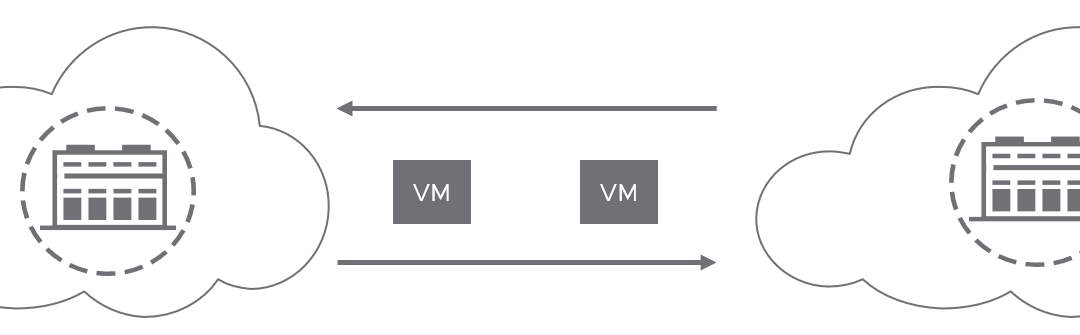
The people from Berkeley do not necessarily promote a multi-cloud architecture, but have the idea of an intercloud broker that places your workload on the right cloud based on different factors. They see the intercloud as an abstraction layer with brokering services:
In my understanding their idea goes towards the direction of an intelligent and automated cloud management platform that takes the decision where a specific workload and its data should be hosted. And that it, for example, migrates the workload to another cloud which is cheaper than the current one.
Cloud Native Technologies for Multi-Cloud
Companies are modernizing/rebuilding their legacy applications or create new modern applications using cloud native technologies. Modern applications are collections of microservices, which are light, fault tolerant and small. These microservices can run in containers deployed on a private or public cloud.
Which means, that a modern application is something that canadapt to any environment and perform equally well.
The challenge today is that we have modern architectures, new technologies/services and multiple clouds running with different technology stacks. And we have Kubernetes as framework, which is available in different formats (DIY or offerings like Tanzu TKG, AKS, EKS, GKE etc.)
Then there is the Cloud Native Computing Foundation (CNCF) and the open source community which embrace the principal of “open” software that is created and maintained by a community.
It is about building applications and services that can run on any infrastructure, which also means avoiding vendor or cloud lock-in.
Challenges of Interoperability and Multiple Clouds
If you discuss multi-cloud and infrastructure independent applications, you mostly end up with an endless list of questions like:
How can we achieve true workload mobility or application portability?
How do we deal with the different technology formats and the “language” (API) of each cloud?
How can we standardize and automate our deployments?
Is latency between clouds a problem?
What about my stateful data?
How can we provide consistent networking and security?
What about identity federation and RBAC?
Is the performance of each cloud really the same?
How should we encrypt traffic between services in multiple clouds?
What about monitoring and observability?
Workload Mobility and Application Portability without an Intercloud
VMware has a different view and approach how workload mobility and application portability can be achieved.
Their value add and goal is the same, but with a different strategy of abstracting clouds.
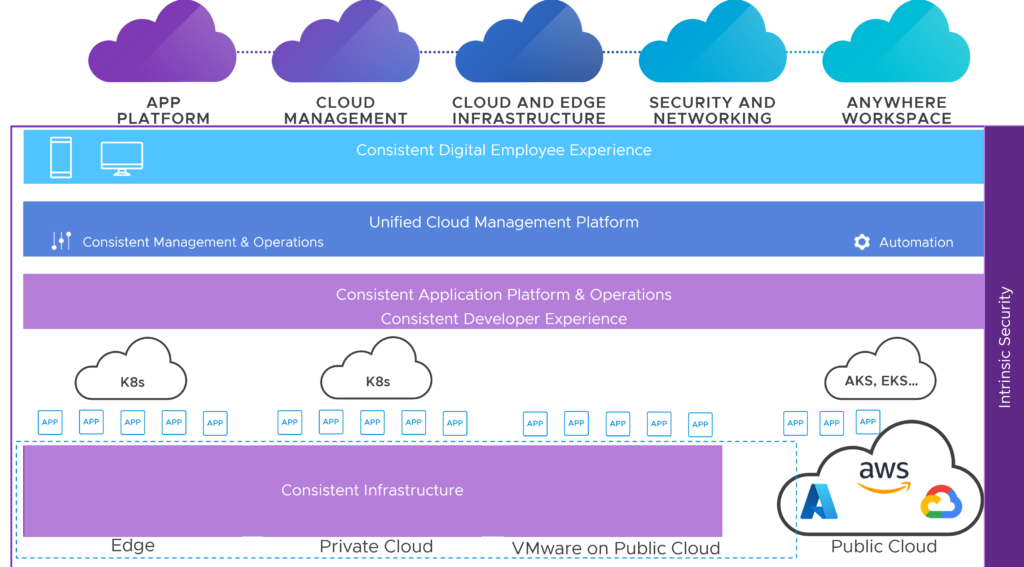
VMware is not building an intercloud but they provide customer a technology stack (compute, storage, networking), or a cloud operating system if you will, that can run on top of every major public cloud provider like AWS, Azure, Google Cloud, IBM Cloud, Oracle Cloud and Alibaba Cloud.
This consistent infrastructure makes it especially for virtual machines and legacy applications extremely easy to be migrated to any location.
What about modern applications and Kubernetes? What about developers who do not care about (cloud) infrastructures?
Project Cascade
At VMworld 2021, VMware announced the technology preview of “Project Cascade” which will provide a unified Kubernetes interface for both on-demand infrastructure (IaaS) and containers (CaaS) across VMware Cloud – available through an open command line interface (CLI), APIs, or a GUI dashboard.
The idea is to provide customers a converged IaaS and CaaS consumption service across any cloud, exposed through different Kubernetes APIs.
I heard the statement “Kubernetes is complex and hard” many times at KubeCon Europe 2022 and Project Cascade is clearly providing another abstraction layer for VM and container orchestration that should make the lives of developers and operators less complex.
Project Ensemble
Another project in tech preview since VMworld last year is “Project Ensemble“. It is about multi-cloud management platform that provides an app-centric self-service portal with predictive support.
Project Ensemble will deliver a unified consumption surface that meets the unique needs of the cloud administrator and SRE alike. From an architectural perspective, this means creating a platform designed for programmatic consumption and a firm “API First” approach.
I can imagine that it will be a service that leverages artificial intelligence and machine learning to simplify troubleshooting and that is capable in the future to intelligently place or migrate your workloads to the appropriate or best cloud (for example based on cost) including all attached networking and security policies.
Conclusion
I believe that VMware is on the right path by giving customers the option to build a cloud-agnostic infrastructure with the necessary abstraction layers for IaaS and CaaS including the cloud management platform. By providing a common way or standard to run virtual machines and containers in any cloud, I am convinced, VMware is becoming the defacto standard for infrastructure for many enterprises.
By providing a consistent cloud infrastructure and a consistent developer model and experience, VMware bridges the gap between the developers and operators, without the need for an intercloud or intercloud protocol. That is the future of cloud computing.
My day 1 at KubeCon Europe 2022 started early and my expectations are high. I arrived after 7.30am and I was impressed how easy and fast the check-in was even I had to show my ID and COVID certificate, which would allow me to get inside to the badge printer.
The event location is quite huge and it is very important that you check the map before you enter the building. I had to learn it the hard way and had no clue where I find the breakout rooms or the event center, which was even a different building. The helpdesks were busy with a long queue of people who probably also were running around like me, like a headless chicken. 😀 But after a half day of running from one room to another, I found my way to the sessions.
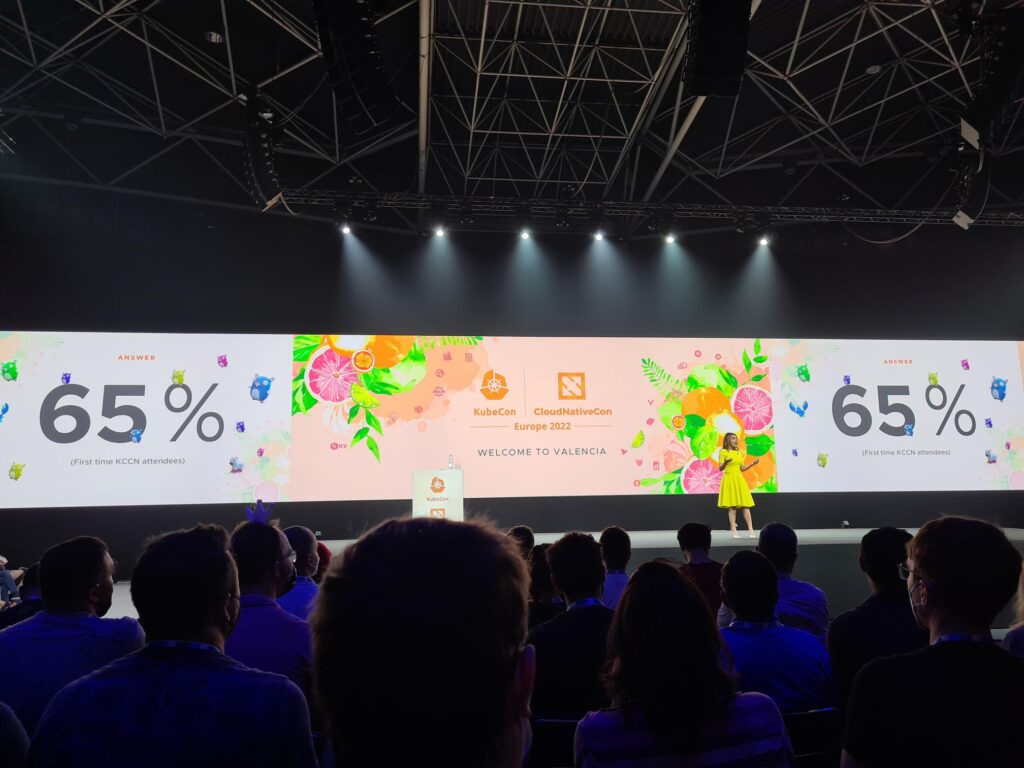
65% of the KubeCon and CloudNativeCon visitors are first-timers like me!
The number if CNCF projects is growing fast
In 2016, the first KubeCon in North America had around 700 people
KubeCon 2022 Europe has >7’000 people onsite and >10’000 joining virtually
Priyanka’s message was about collaboration for long-term success. The CNCF is about a large continuously growing community that must work together, and each person can contribute in her/his own way.
These were the four big announcements she presented during the keynote session:
KubeCon Europe 2023 is going to happen in Amsterdam
After that Boeing presented their company and mission and we heard Mercedes Benz telling their story of “7 years running Kubernetes”. Mercedes Benz operates more than 900 Kubernetes clusters and 3’500 machines all over the world. They also mentioned that they migrated their clusters to Cluster API, a Kubernetes project with VMware as one of the main contributors.
After a short break it was time for my scheduled breakout sessions.
West Side CD: The Deployment Ballet Goes On
Benoit Moussaud from VMware Tanzu presented a different way of CI/CD with Cartographer, which ” is a Kubernetes-native Choreographer providing higher modularity and scalability for the software supply chain”:
Overview and State of Knative
The next session was in the event center building, which hosted the presentation of Mauricio Salatino, VMware and Carlos Santana, IBM. They gave an overview of the Knative philosophy of being “Kubernetes native”.
Knative offers a simplified developer experience deploying and managing stateless and event-driven applications. Maurico mentioned the following Knative features:
Simpler Abstractions
Autoscaling
Progressive Rollout
Event Integrations
Event Handling
Pluggable
From Kubernetes to PaaS to … Err, What’s Next?
The third session I would like to highlight was from Daniel Bryant, Ambassador Labs. The key message of his presentation was about the “golden path” aka a paved platform.
At the beginning of his presentation Daniel started with the “real question” how much you should build yourself and how you should you assemble the control plane for effective use. Before going deeper into that topic he also joked around, and we know that 50% of all jokes are true, that the CNCF landscape and each KubeCon is not helping very much to make things for developers and operators easy:
It was very interesting and important to hear from him, that you cannot provide a good developer experience without a good user experience. Enterprises and platform teams need to treat the platform as a product and focus on tooling and interoperability.
Daniel said, that you need to think and design in/for different personas, user research is key and that you should watch your users doing things or using tools. Then you understand how you need can provide a good user experience for platforms. I personally believe that design thinking is key here.
Another interesting fact he mentioned is how the focus changed from the past KubeCons to the actual one. People focused mostly on operations and realized that the platform as a product mindset and approach is the way forward to provide also a good developer experience.
The VMware Tanzu Labs platform-as-product approach combines Product Management (PM), User-Centered Design (UCD), Agile, eXtreme Programming (XP), and Site Reliability Engineering (SRE) practices. A dedicated, balanced platform team uses these practices to both build and run the platform product.
Conclusion
It was a long day with a lot of impressions and new information. 😀 I definitely felt the spirit and the expertise of this large community! I am already excited and curious about tomorrow! Enjoy KubeCon Europe 2022!
PS: Are you looking for a job? KubeCon and the community got you covered!
Twitter and LinkedIn are flooded with posts about the KubeCon + CloudNativeCon Europe 2022 event happening in Valencia, Spain. It is one of the biggest conferences in the world, where users, developers, geeks and newbies come together, who are interested in cloud native standards, technologies and projects like Envoy, Fluentd, Harbor, Helm, Kubernetes, Open Policy Agent, Argo, Buildpacks, Cilium, Contour, Flux, SPIFFE, SPIRE and many more.
While May 16-17th consist of a pre-event program, which I don’t attend, I look forward to main conference from 18-20 May. For those who cannot or still don’t want to attend in person, KubeCon Europe is a hybrid event that can be joined virtually as well.
Why do I join KubeCon Europe?
The first reason is the fact that this is my first KubeCon Europe. I want to experience the spirit of the open source community and learn new things. I know some of the open source projects VMware is contributing to but there are so many awesome projects and technologies that I would like to understand better.
The second reason is VMware Tanzu. VMware has a booth at KubeCon and a lot of Tanzu folks are there that I would like to meet. Some of them are presenting as well and I would like to listen to their words and learn how they explain things, which helps me then to better serve my customers.
Session Abstract: In this session, we’ll give attendees an overview of the Knative philosophy of being Kubernetes-native and working well with existing Kubernetes tools. Then we’ll provide a demo of FaaS using Knative and conclude with a roadmap for what’s next. Most importantly, we’ll provide information on how you can get involved either as a contributor or end-user who wants to give feedback on its future direction. With its recent donation to the CNCF at the incubating level, there’s never been a better time to get started with Knative.
Session Abstract: This talk will look back on my experience of building platforms, both as an end-user and now as part of an organization helping our customers do the same. The key takeaways are: – Treat platform as a product – Realize that you can’t have good developer experience (DevEx) without good UX – Focus on workflows and tooling interoperability We’ll wrap this talk with a walk-through of the CNCF ecosystem through the developer control plane lens, and look at what’s next in the future of this important emerging category.
Session Abstract: Project Harbor is an open-source trusted cloud native registry project that stores, manages, signs, and scans content, thus resolving common image or Helm Chart management challenges. It has been widely used by organizations large and small around the world to resolve both the container image and Helm Chart management challenges. In this presentation, we will cover some advanced features of using Harbor, such as image signature management(cosign), image management in a cloud environment, unified management of Helm chart and container images, and highly-available deployments.Furthermore, the team would love to get feedback from users and contributors to current features and future roadmap.
Session Abstract: SPIFFE aims to strengthen the identification of software components in a common way that can be leveraged across distributed systems by anyone, anywhere. The ability to maintain software security by standardizing how systems define, attest, and maintain software identity, regardless of where systems are deployed or who deploys those systems, confers many benefits. The use of SPIFFE can significantly reduce costs associated with the overhead of managing and issuing cryptographic identity documents and accelerate development by removing the need for developers to understand the complexity involved to secure service-to-service communication, but that is not the only outcome. Production identity can have a positive impact on many areas such as interoperability, compliance, audibility, and more. This presentation demonstrates the real world scenarios and outcomes of deploying SPIFFE across your infrastructure and also using it to bridge and integrate the infrastructure of others.
Session Abstract: Cloud Provider code allows Kubernetes to run on top of different platforms, with an implementation for each. The agenda will include: An overall status report on removing the cloud provider code from the main Kubernetes repository to “out of tree repositories; “Lightning talks” for individual cloud providers, reporting efforts, accomplishments, and roadmap for features and getting “out-of-tree”. We’ll also discuss the plans to handle cloud provider migration – including interesting topics like building and migrating to cloud controller managers, and kubelet image credential providers. The goal of SIG Cloud Provider is to promote a vendor-neutral ecosystem for our community. We will close with details on how you can get involved with the SIG as either a cloud infrastructure supporter, a K8s distribution author, or a K8s user.
Session Abstract: The Cluster Lifecycle SIG is the Special Interest Group that is responsible for building the user experience for deploying and upgrading Kubernetes clusters. Our mission is examining how we should change Kubernetes to make it easier to operate. In this deep dive, we will examine how Cluster API simplifies the cluster management experience for cluster operators by enabling consistent machine management across environments and quick stamping of Clusters using some new exciting features like ClusterClass.
Session Abstract: Kubernetes abstracts out differences across hosting infrastructure, but there are cases when integrated monitoring across the layers of storage, compute, etc, are essential. When faults or reconfiguration happen, manual monitoring, diagnosis and remediation can be slow, costly, and error prone. The VMware Event Broker Appliance is an open-source project, usable with Cloud Events and Knative to optimize availability, auditing, compliance, etc. based on vSphere events. We’ll cover popular use cases and how to get started. The K8s VMware User Group shares best practices for hosting K8s on VMware infrastructure, and we will close the session with details on how you can participate in the group.
I’ll do my best to provide daily summaries of the sessions I attended.
See You in Valencia
I expect to learn a ton of new things and I hope to meet a lot of new faces.
If you are at KubeCon Europe and want to have a chat, you will most likely find me near the VMware Tanzu booth. 🙂
According to Gartner, regulated industry customers (such as finance and healthcare) and governments are looking for digital borders. Companies in these sectors are looking to reduce vendor lock-in and single points of failure with their cloud providers, whose data centers sometimes are also outside their country (e.g., Switzerland based customer with an AWS data center in Frankfurt).
The market for cloud technology and services is currently dominated by US and Asian cloud providers and many (European) companies store their data in these regions. There are European regions and data centers, but the geopolitical and legal challenges, concerns about data control, industry compliance and sovereignty are driving the creation of new national clouds.
That is why Gartner sees sovereign clouds as one of the emerging technologies, which is currently at the start of the August 2021 published hype cycle:
As an example and first use case I would mention the Swiss federal administration, which doesn’t see the need for an independent technical infrastructure under public law.
In June 2021 they published the statement that they notified the following cloud providers to become part of the federal administration’s initial multi-cloud architecture:
Amazon Web Services (AWS)
IBM
Microsoft
Oracle
Alibaba
There are several reasons (pricing, market share, local data center availability) that led to this decision to build a multi-cloud architecture with these cloud providers. But it was interesting to read that the government did an assessment and concluded that no technical independent infrastructure is needed – no need for a local sovereign cloud.
This means that they want to keep their existing data centers to provide infrastructure and data sovereignty.
Interestingly, the Swiss confederation is exploring initiatives for secure and trustworthy data infrastructure for Europe and is examining participation in GAIA-X.
Use Case 2 – Current Sovereign Cloud Providers
There are other examples where organizations and governments saw the need for a sovereign cloud. Having a public cloud provider’s data center in the same country does not necessarily mean, that it’s a sovereign cloud per se. Hyperscale clouds often rely on non-domestic resources that maintain their data centers or provide customer support.
Governments and regulated industries say that you need domestic resources to provide a true sovereign cloud.
A good example here is the UK government, who has chosen the provider UKCloud, that delivers a consistent experience that spans the edge, private cloud and sovereign cloud.
Another VMware sovereign cloud provider is AUCloud, who provides IaaS to the Australian government, defense, defense industries and Critical National Industry (CNI) communities.
The third example I would like to highlight is Saudi Telecom Company (STC), that brings sovereign cloud services to Saudi Arabia.
What do UKCloud, AUCloud and STC have in common? They all joined the pretty new VMware Sovereign Cloud initiative and built their sovereign clouds based on VMware technology.
Use Case 3 – Cloud Act
Another motivation for a sovereign cloud could be the Cloud Act, which is a U.S. law that gives American authorities unrestricted access to the data of American IT cloud providers. It does not matter where the data is effectively stored. In the event of a criminal prosecution, the authorities have a free hand and do not even have to notify the data owners.
What does this mean for cloud users? Because of the Cloud Act, they cannot be sure whether when and to what extent their data or the data of their customers will be read by foreign authorities.
Use Case 4 – GAIA-X
Let me quote the official explanation of GAIA-X:
The architecture of Gaia-X is based on the principle of decentralization. Gaia-X is the result of many individual data owners (users) and technology players (providers) – all adopting a common standard of rules and control mechanisms – the Gaia-X standard.
Together, we are developing a new concept of data infrastructure ecosystem, based on the values of openness, transparency, sovereignty, and interoperability, to enable trust. What emerges is not a new cloud physical infrastructure, but a software federation system that can connect several cloud service providers and data owners together to ensure data exchange in a trusted environment and boost the creation of new common data spaces to create digital economy.
Gaia-X aims to mitigate Europe’s dependency on non-European providers and there seems to be no pre-defined architecture or preferred vendor when it comes to the underlying cloud platform GAIA-X sits on top.
While one would believe that a sovereign cloud is mandatory for GAIA-X, it looks more like a cloud-agnostic data exchange platform hosted by European providers and customers.
I am curious how providers build, operate and maintain a sovereign cloud stack based on open-source software.
How real is the need for Sovereign Cloud?
If a company or government wants to keep, extend, and maintain their own local data centers, this is still a valid option of course. But the above examples showed that the need for sovereign clouds exists and that the global interest seems to be growing.
What is the VMware Sovereign Cloud Initiative?
In October 2021 VMware announced their VMware Sovereign Cloud initiative where they partnering with cloud service providers to deliver a sovereign cloud infrastructure with cloud services on top to customers in regulated industries.
To become a so-called VMware Sovereign Cloud Provider, partners must go through an assessment and meet specific requirements (framework) to show their capability to provide a sovereign cloud infrastructure.
VMware defines a sovereign cloud as one that:
Protects and unlocks the value of critical data (e.g., national data, corporate data, and personal data) for both private and public sector organizations
Delivers a national capability for the digital economy
Secures data with audited security controls
Ensures compliance with data privacy laws
Improves control of data by providing both data residency and data sovereignty with full jurisdictional control
VMware aims to help regulated industry and government customers to execute their cloud strategies by connecting them to VMware Sovereign Cloud Providers (like UKCloud, AUcloud, STC, Tietoevry, ThinkOn or OVHcloud).
Sovereign Cloud Providers in Switzerland
Currently, there is no official VMware sovereign cloud provider in Switzerland. We have a few and strong VMware cloud provider partners as part of the VMware Cloud Provider Program (VCPP):
Let us come back to the use case 1 with the Swiss federal administration. They are building a multi-cloud and would have in Switzerland a potential number of at least 10 cloud service providers, which could become an official VMware Sovereign Cloud Provider.
There are other Swiss providers who are building a sovereign cloud based on open-source technologies like OpenStack.
Hyperscalers like Microsoft or Google need to partner with local providers if they want to build a sovereign cloud and deliver services.
VMware already has 4300+ partners with the strategic partnerships and the same technology stack in 120+ countries and some of them are already sovereign cloud providers as mentioned before.
What are the biggest challenges with a multi-cloud and a sovereign cloud infrastructure?
What do you think are the biggest challenges of an organization that builds a multi-cloud with different public cloud providers and sovereign clouds?
Let me list a few questions here:
How can I easily migrate my workloads to the public or sovereign cloud?
How long does it take to migrate my applications?
Which cloud is the right one for a specific workload?
Do I need to refactor some of my applications?
How can I consistently manage and operate 5 different public/sovereign cloud providers?
What if I one of my cloud providers is not strategic anymore? How can I build a cloud exit strategy?
How do I implement and maintain security?
What if I want to migrate workloads back from a public cloud to an on-premises (sovereign) cloud?
Which Kubernetes am I going to use in all these different clouds?
How do I manage and monitor all these different Kubernetes clusters, networking and security policies, create secure application communication between clouds and so on?
How do I control costs?
These are just a small number of questions, but I think it would take your organization or your cloud platform team a while to come up with a solution.
What is the VMware approach? Let me list some other articles of mine that help you to better understand the VMware multi-cloud approach:
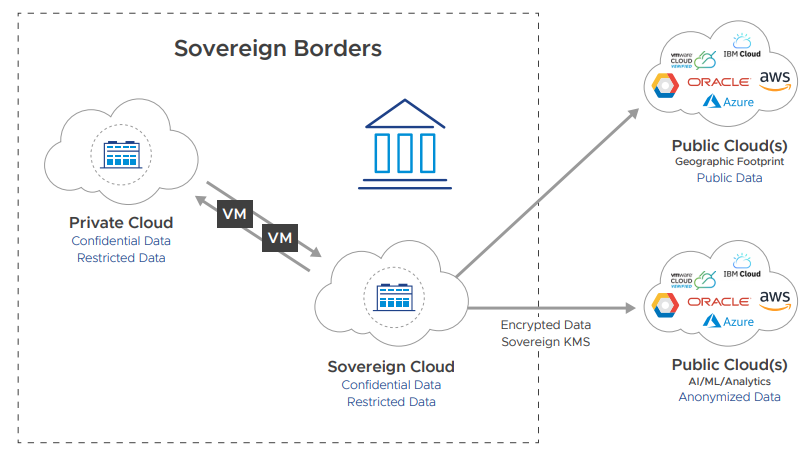
Public cloud providers build local data centers and provide data residency. Sovereign clouds provide data sovereignty. Resident data may be accessed by a foreign authority while data sovereignty refers to data being subject to privacy laws and governance structures within the nation where that data is collected.
Controlling the location and access of data in the cloud has become an important task for CIOs and CISOs and I personally believe that sovereign clouds are not becoming important in 2 or 3 years, they are already very important and relevant, and we can expect a growth in this area in the next months.
My conclusion here is, that sovereign clouds and the public clouds are not competitors, they complement each other.
My name is Michael Rebmann. I am an Enterprise Account Manager at Nutanix, helping public sector organizations design sovereign and compliant cloud infrastructures. I focus on sovereign cloud, hybrid multi-cloud architectures, and data privacy in regulated industries.
The views and opinions expressed here are entirely my own, reflecting my journey and insights.













 Priyanka’s message was about collaboration for long-term success. The CNCF is about a large continuously growing community that must work together, and each person can contribute in her/his own way.


 It was very interesting and important to hear from him, that you cannot provide a good developer experience without a good user experience. Enterprises and platform teams need to treat the platform as a product and focus on tooling and interoperability.